Edmonton continues clean-up response after powerful weekend thunderstorm | CBC News
A severe thunderstorm brought significant flooding, road closures, and power outages to Edmonton on Saturday night, July 25, 2026. The storm, characterized by intense winds and heavy rain, led to numerous calls to emergency services and caused disruptions across the city.
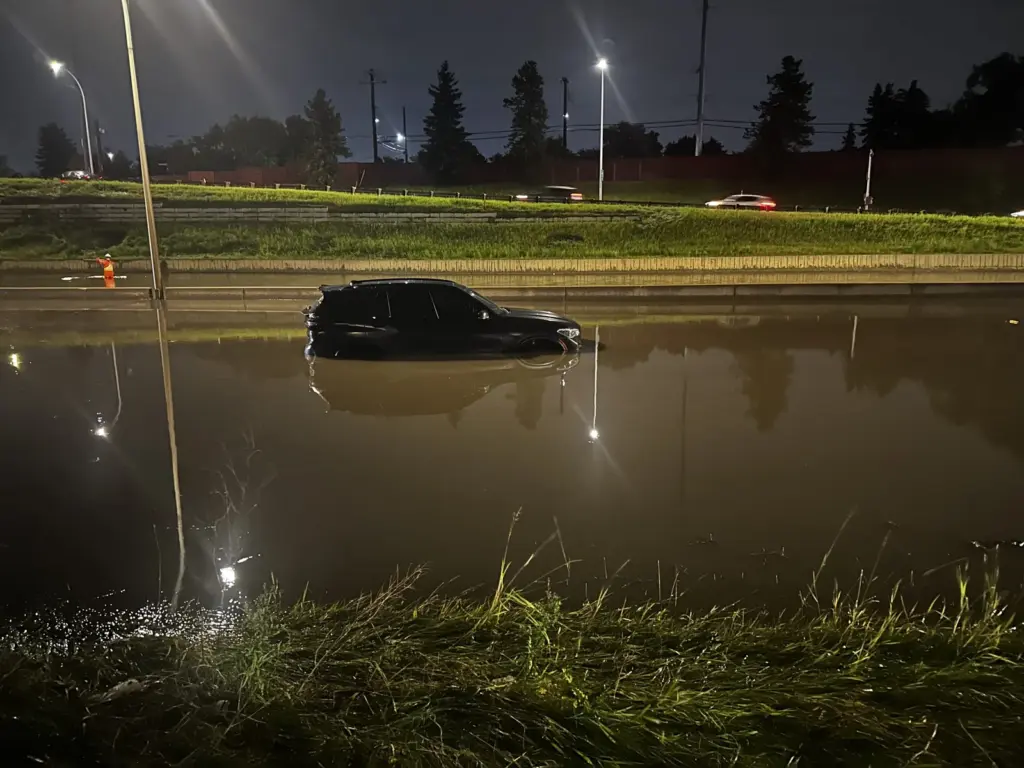
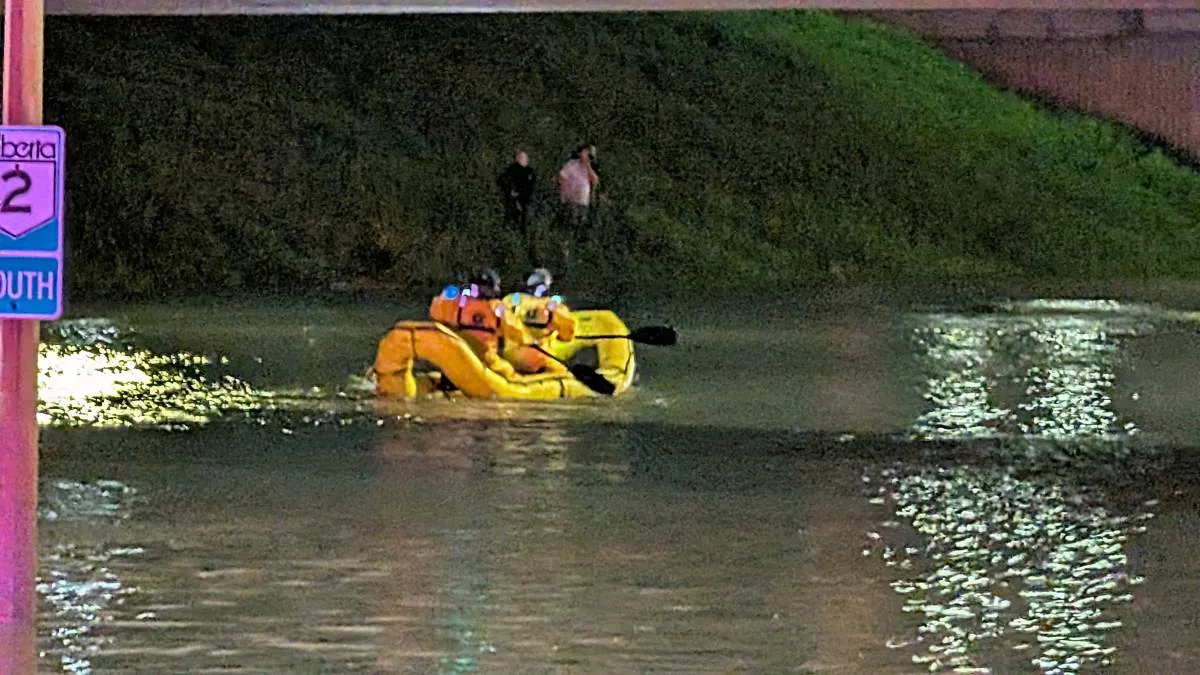
One of the most affected areas was Whitemud Drive in west Edmonton, where several underpasses flooded. The 170 Street underpass became impassable, requiring firefighters to rescue individuals stranded on an embankment between the northbound and southbound overpass bridges. Vehicle traffic on the one-way freeway lanes was forced to turn around, and side ramps were also impassable in certain spots. Three vehicles became stuck at the eastbound 170 Street off-ramp, where water collected to approximately two feet deep due to a dip in the road.
Around 10:30 p.m. on Saturday, Edmonton police announced the closure of the entire Whitemud Drive between 156 Street and 178 Street. Police advised against non-essential travel due to the storm and subsequent runoff, which created significant issues on roadways throughout the city. Emergency dispatch 911 experienced an exceptionally high volume of calls, potentially impacting response and wait times. Residents were asked to use non-emergency lines for non-urgent matters to keep 911 available for critical situations.
Road Closures and City-Wide Impacts
Beyond Whitemud Drive, several other major roads experienced flooding and closures. These included sections of Yellowhead Trail from 82 Street to 156 Street, Jasper Avenue from 82 Street to 92 Street, and 97 Street where it dips under an old rail bridge between 104 and 105 avenues. Groat Road northbound was closed from the River Valley Road interchange to 107 Avenue due to flooding that transformed the ravine roadway into a river. Around 1 a.m. Sunday, flooding was also reported on Connors Road, under the 98 Avenue bridge, prompting drivers to avoid the area.
The swift-moving storm also impacted public events. Attendees at KDays sought shelter inside the Expo Centre, and a Post Malone concert at Commonwealth Stadium concluded early as fierce winds and sideways rain hit the venue. Concertgoers took refuge in the concourse. Police requested that people avoid the vicinity of Commonwealth Stadium and the Expo Centre, specifically 112 Avenue from Wayne Gretzky Drive to 97 Street, to ensure safe departure for attendees.
By Sunday morning, some major roads had reopened. Yellowhead Trail and Whitemud Drive were cleared in certain sections. Groat Road was fully open in the northbound direction, and Connors Road was open southbound. However, other lanes remained closed as crews continued their work. The City of Edmonton stated that crews were actively working to reopen roads, clear trees and debris, assess damage, and remove water.
Weather Conditions and Utility Response
The severe storm began around 9 p.m. on Saturday night. Between 9 p.m. and 10 p.m., nearly 30 millimetres of rain fell in the Blatchford area of central Edmonton. During this hour, wind speeds averaged nearly 40 km/h, with a maximum recorded speed of 84 km/h. Environment Canada meteorologists had been tracking several waves of storm systems on Saturday night, issuing warnings for dangerous thunderstorms capable of producing damaging wind gusts, hail ranging from loonie- to ping pong ball-size, and heavy rain. The storm cell, which stretched from Barrhead in the north to Leduc in the south, was moving east at 45 km/h and carried a risk of tornadoes. Earlier in the evening, around 7 p.m., a tornado warning was issued west of Edmonton in Yellowhead County near Peers and Niton Junction.
The storm also led to power outages at intersections and downed trees. As of 2:34 p.m. on Sunday, 20 areas were experiencing power outages, according to Epcor’s website. Epcor stated that its system was generally performing well despite the storm’s intensity. The utility company noted that while the system is designed for typical rainfall, extreme and prolonged rainfall can challenge or temporarily exceed capacity in localized areas. Saturated ground conditions can also affect system performance, as more water enters the system rather than seeping into the ground. Epcor deployed additional crews and equipment to monitor infrastructure and support emergency response efforts.

A tow truck driver reported assisting several individuals whose cars were stuck in thigh-deep water on Saturday night, noting it was the first time he had seen such an amount of rain this year. He had been called to the overpass near Whitemud and 159 Street multiple times. Edmonton Transit Service reported city-wide delays due to the weather around midnight. Residents are encouraged to report ongoing service impacts or issues directly to 311. Officials also urge caution when driving or to use public transit options while crews work to clear debris and water. Epcor advises residents to avoid flooded roadways, stay clear of underpasses during heavy rain, map out alternate routes, and delay travel during severe weather alerts. They also recommend staying at least 10 metres away from downed power lines, maintaining a safe distance from stormwater ponds due to changing water levels and unstable shorelines, and checking sump pumps while ensuring eavestroughs direct water away from foundations.
The non-emergency line for Edmonton Police Service is 780-423-4567 or #377 within the city.
Source: globalnews.ca