2026 NBA Draft grades: Analysis on every pick from AJ Dybantsa, Darryn Peterson, Cameron Boozer through No. 60 - CBS Sports
Top Selections Highlight Draft Night
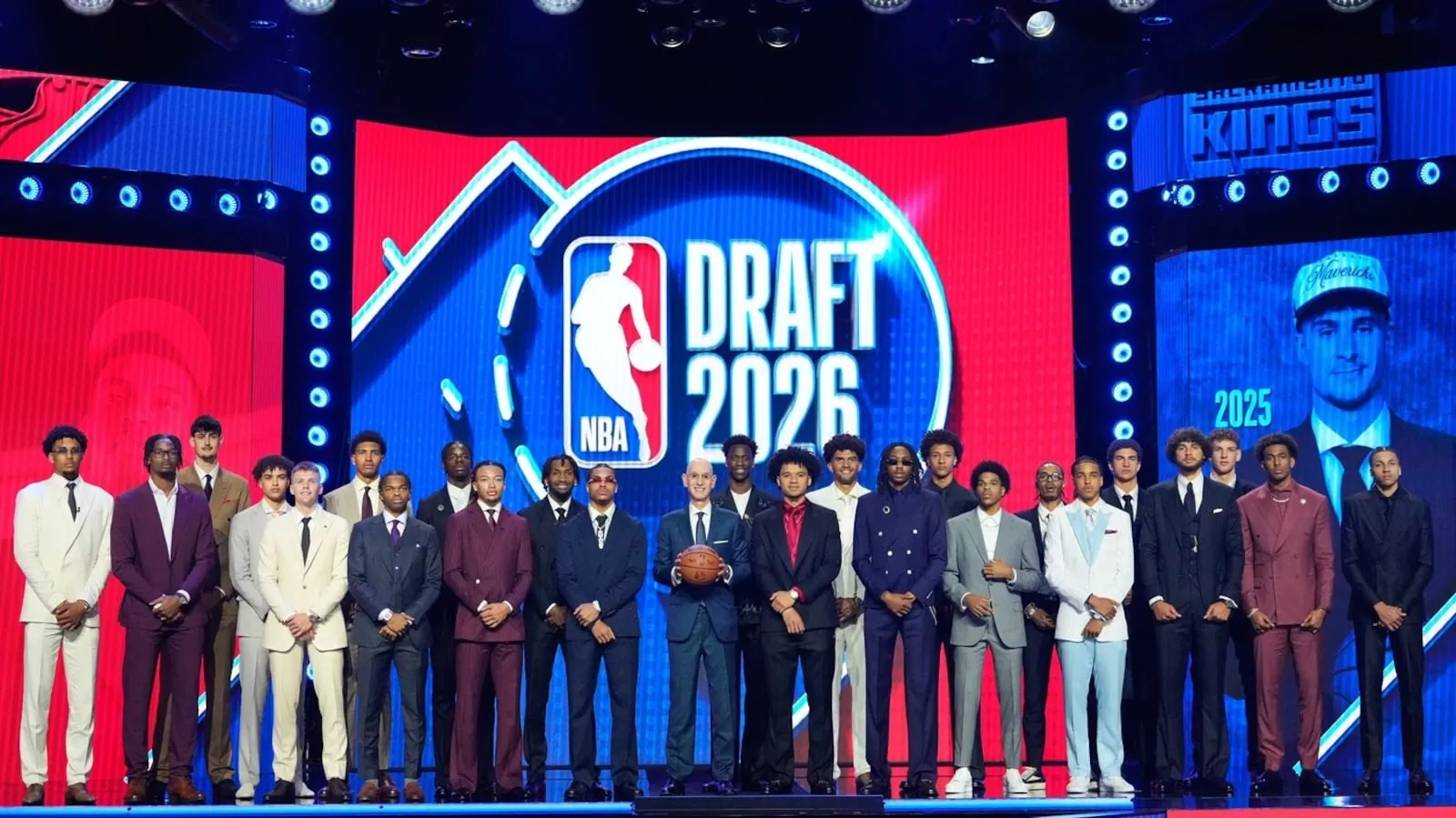
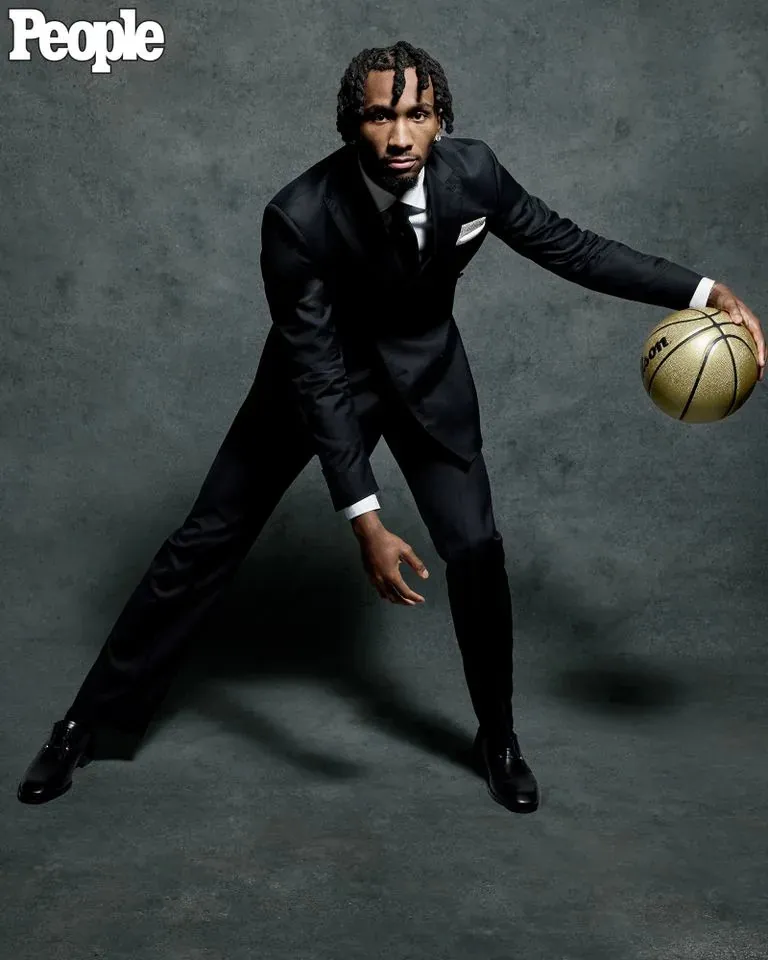
The 2026 NBA Draft showcased significant talent, particularly among the top picks, with minimal early trade activity. The Washington Wizards, Utah Jazz, Memphis Grizzlies, and Chicago Bulls each secured players they believe could become foundational for their franchises. Notably, none of the initial 12 picks were traded, and the first round proceeded without major unexpected developments.
AJ Dybantsa was selected as the No. 1 overall pick by the Washington Wizards. Dybantsa, a 6-foot-9 forward, described himself as “the most versatile” player in his draft class, emphasizing his ability to perform a variety of skills. He noted that while he might not excel in one specific area more than others, his all-around game makes him unique.
The Utah Jazz chose Darryn Peterson as the second overall pick. Peterson, a guard, expressed gratitude for his family’s support throughout his journey. Following Peterson, Cameron Boozer, son of former NBA All-Star Carlos Boozer, was selected third overall by the Memphis Grizzlies. Boozer confidently stated, “I think I win better than anyone else in the class.” He shared that his father’s best advice was to “Be present. Enjoy the moment. Soak it all in. Have fun.”
Caleb Wilson was the fourth overall pick, heading to the Chicago Bulls. Wilson, a power forward, mentioned modeling his game after Kobe Bryant and credited his father, Jerry Wilson, for believing in him early on. The Los Angeles Clippers then selected Keaton Wagler as the fifth overall pick. Wagler, a guard, averaged 17.9 points, 5.1 rebounds, and 4.2 assists per game in college and believes his shooting ability is unmatched in his class.
Rounding out the top six, Mikel Brown Jr. was chosen by the Brooklyn Nets. Brown Jr., a point guard, averaged 18.2 points, 4.7 assists, and 3.3 rebounds in his freshman year. He believes he is the best at “creating advantages” for his team, whether through scoring or setting up teammates. His father, Christopher Brown Sr., was instrumental in instilling confidence in him.
Team Strategies and Notable Selections
The Atlanta Hawks made two first-round selections, picking Kingston Flemings at eighth overall and Zuby Ejiofor at 23rd overall. Flemings, a freshman point guard, adds to Atlanta’s guard corps, which includes Nickeil Alexander-Walker, CJ McCollum, and Dyson Daniels. Ejiofor is expected to provide immediate defensive toughness and depth to the frontcourt after playing four college seasons. Flemings, who models his game after Tyrese Maxey, aims to showcase his ability to get “two feet in the paint” and score in transition.
The Boston Celtics acquired Chris Cenac Jr. at 27th overall. Cenac, a versatile big man, fills a need for the Celtics, whose frontcourt faced challenges in the playoffs. He is expected to contribute energy from the bench and develop his 3-point range and finishing skills. The Brooklyn Nets, despite slipping three spots in the lottery, selected Mikel Brown Jr. at sixth overall and Joshua Jefferson at 28th overall. Jefferson, a four-year college player, adds depth to the team.
The Charlotte Hornets drafted Hannes Steinbach at 14th overall and Christian Anderson at 18th overall. Steinbach, a German centre, is effective around the basket, while Anderson, a pure shooter, addresses the team’s need for more shooting. The Chicago Bulls, in addition to Caleb Wilson, also selected Dailyn Swain at 15th overall. The team hopes Wilson’s athleticism and swagger, combined with 2024 pick Matas Buzelis, will create an exciting offensive dynamic, though both Wilson and Swain need to develop their shooting.
The Dallas Mavericks added Morez Johnson Jr. as the ninth overall pick, reuniting him with former Michigan coach Dusty May. Johnson Jr., a forward, models his game after Giannis Antetokounmpo, focusing on aggressive play. He credits his father, Morez Johnson Sr., for his early belief in him. The Mavericks also selected Sergio De Larrea at 25th overall, Tobi Lawal at 48th overall, and Vsevolod Ishchenko at 56th overall.
Second Round and Team Outlooks
In the second round, the Cleveland Cavaliers selected Meleek Thomas at 34th overall. Thomas, a guard known for his 3-point shooting, could help revitalize Cleveland’s perimeter attack. The Denver Nuggets picked Trevon Brazile at 35th overall and Bryce Hopkins at 49th overall. Brazile, a high-flying player, could provide another option behind Aaron Gordon, while Hopkins brings wing size and college experience.
The Detroit Pistons drafted Ebuka Okorie at 17th overall and Ugonna Onyenso at 53rd overall. The team’s selections aim to address their need for secondary playmakers, as their offensive efficiency decreased significantly in the playoffs. The Milwaukee Bucks selected Brayden Burries as the tenth overall pick following a trade involving Giannis Antetokounmpo. Burries, a guard, averaged 16.1 points, 4.9 rebounds, and 2.4 assists per game at Arizona and believes he excels at winning and scoring.
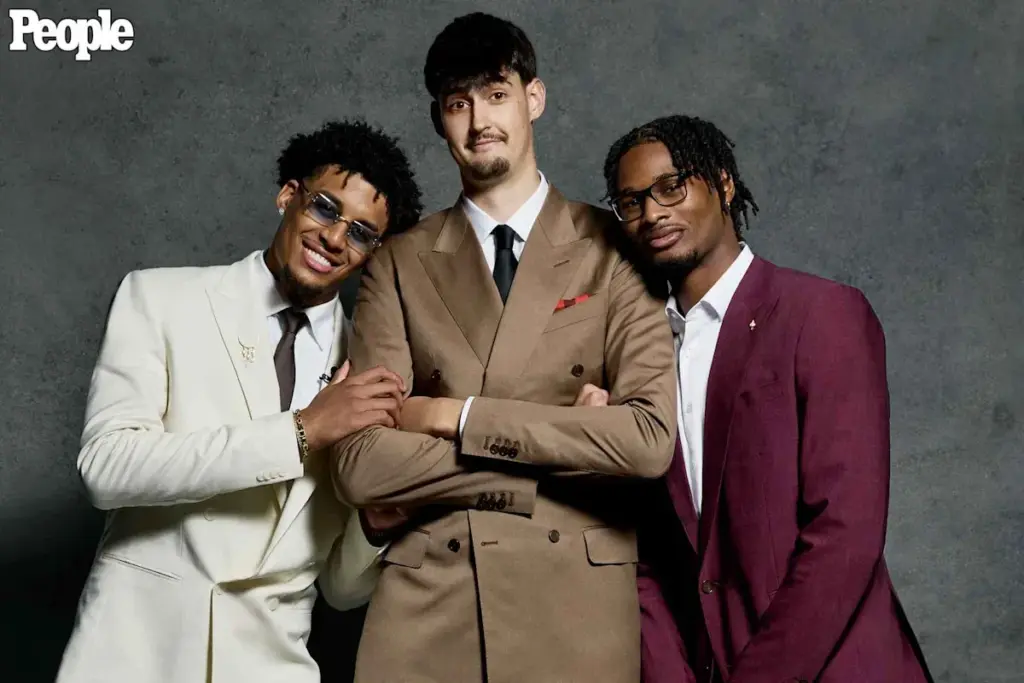
The draft also saw three players from Michigan selected in the first round: Morez Johnson Jr. (ninth overall to Dallas), Yaxel Lendeborg (11th overall to the Golden State Warriors), and Aday Mara (12th overall to the Oklahoma City Thunder). This marked the first time in 36 years that a trio from the school was selected in the first round.
The Sacramento Kings selected Darius Acuff Jr. with the seventh pick. Acuff Jr., a guard, averaged 23.5 points, 6.4 assists, and 3.1 rebounds per game in his freshman season. He modeled his game after Derrick Rose and learned from Draymond Green about taking defense seriously.
The Portland Trail Blazers did not make any selections in the first round, having traded their pick five years prior. In total, 29 of the NBA’s 30 teams made at least one selection in the draft.
Source: tsn.ca