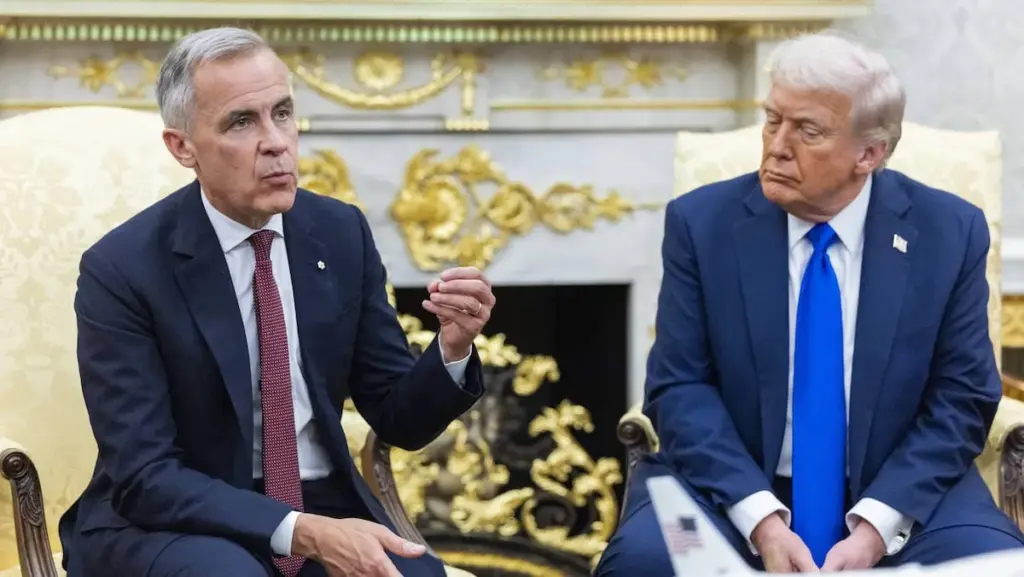
On April 20, 2026, columnist Antoine Robitaille raised eyebrows as he critiqued former Bank of England Governor Mark Carney’s recent communications about trade negotiations with the United States. Robitaille believes Carney is preparing Canadians for bad news, a sentiment he expressed during a segment with Benoit Dutrizac.
Robitaille noted, “M. Carney nous prépare à de mauvaises nouvelles en reprenant des éléments de son discours depuis un an.” This statement reflects his concern that Carney’s messaging hints at troubling developments ahead.
In a video shared by Carney, he emphasized that Canada’s close ties to the U.S. could be viewed as a weakness that needs addressing. This perspective has drawn mixed reactions from observers and commentators alike.
Robitaille elaborated on this point, saying, “Il a raison de dire qu’il a fait plusieurs ententes à l’étranger, [mais] le pays a la politique de sa géographie.” His comments suggest skepticism about the effectiveness of Carney’s approach to communicating complex geopolitical realities.
Moreover, Robitaille criticized the use of American platforms for anti-American messaging, pointing out that it raises questions about credibility. He recalled how journalists were scandalized in the 1970s when Robert Bourassa sent cassettes to newsrooms—now, it’s all about YouTube videos.
He remarked, “Sur la forme, je me souviens que les journalistes étaient scandalisés dans les années 70 parce que Robert Bourassa envoyait des cassettes aux rédactions. Maintenant, ce sont des cassettes YouTube.” This comparison underscores the evolution of communication methods over time.
As discussions around trade negotiations continue, Robitaille’s insights resonate with many Canadians who are concerned about the implications for their economy and jobs. The relationship between Canada and the United States has historically been viewed as both a strength and a vulnerability.
Charles Milliard was referenced by Robitaille as a ‘girouette’ (weather vane), highlighting his view that some leaders may not take a firm stance in these critical discussions.
The public’s response remains varied. Some appreciate the transparency in communication while others share Robitaille’s concerns about potential fallout from these negotiations. Details remain unconfirmed regarding any specific outcomes from the ongoing talks.