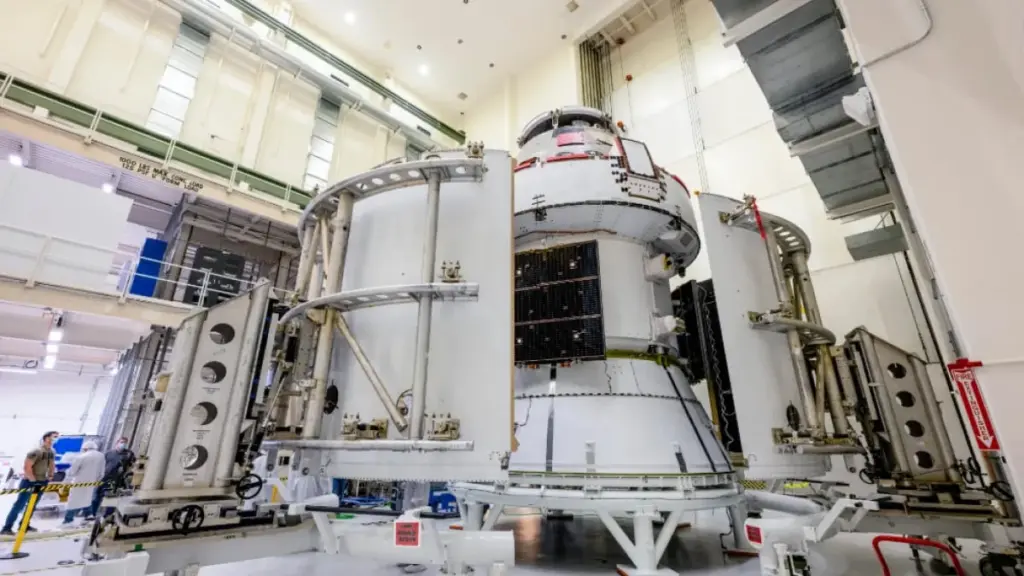
The Artemis 2 mission has concluded with a remarkable splashdown in the Pacific Ocean off the coast of San Diego, California, marking a significant milestone for NASA and the future of human space exploration. The astronauts, including Victor Glover, Christina Koch, Reid Wiseman, and Jeremy Hansen, are expected to splash down at 8:07 p.m. ET, demonstrating the successful culmination of their journey.
During the re-entry, the spacecraft will reach speeds of nearly 40,000 km/h and experience temperatures soaring to approximately 3,000°C. The astronauts will endure nearly 4 Gs during this intense phase, which will last about 14 minutes. This mission is a follow-up to the uncrewed Artemis I mission and showcases NASA’s commitment to returning humans to the Moon and beyond.
As the spacecraft descends, two drogue parachutes will deploy at about 22,000 feet (6,705 m), followed by three main parachutes at approximately 1,800 metres. This carefully orchestrated sequence is designed to ensure a safe landing, with the astronauts expected to be recovered by the USS John P. Murtha.
Victor Glover expressed the profound experience of re-entry, stating, “Riding a fireball through the atmosphere is profound, as well. I’m gonna be thinking about and talking about all of these things for the rest of my life.” His sentiments reflect the excitement and significance of this mission for all involved.
Once the capsule has safely landed, recovery operations will commence. Liliana Villarreal, a key recovery team member, explained, “After ensuring the area is safe, they’re going to go ahead and open the Orion hatch and help the astronauts from their seats to a large inflatable raft that we call the front porch.” This meticulous process highlights the extensive planning that has gone into ensuring the astronauts’ safe return.
Following their recovery, the astronauts will be transported back to the USS John P. Murtha, where they will undergo medical evaluations before returning to the Johnson Space Center in Houston. This mission not only showcases NASA’s technological advancements but also emphasizes the collaborative efforts with the European Space Agency.
As the world watches this historic event unfold, the excitement surrounding the Artemis program continues to grow. Details remain unconfirmed about the next steps following the astronauts’ return, but the anticipation for future missions is palpable.