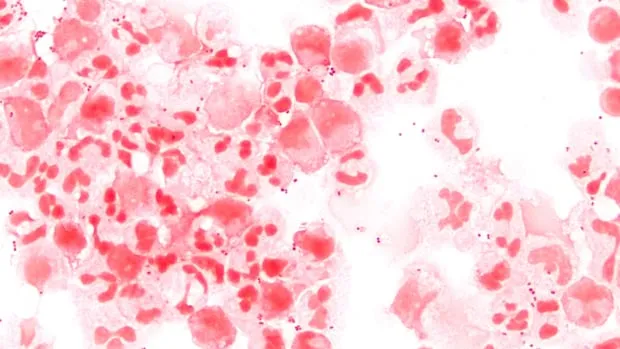
Canada is facing a significant public health challenge as cases of invasive meningococcal disease (IMD) have surged to the highest levels seen in over a decade. With nearly 100 cases reported in 2023, health officials are sounding the alarm on this dangerous bacterial infection, which can lead to severe conditions such as meningitis and sepsis.
The rise in IMD cases has been particularly alarming in Manitoba, where the province has seen above-average case counts over the last three years, largely attributed to an outbreak of the meningococcal W strain. In 2025 alone, Manitoba reported 23 cases, resulting in four tragic deaths, marking an annual tally roughly five times higher than usual.
Statistics reveal a troubling trend: in 2021, there were 48 cases of IMD across Canada, which increased to 74 in 2022, and now nearly 100 in 2023. Saskatchewan has also witnessed a sharp increase, with annual cases jumping from four in 2024 to 17 in 2025. The death rate for IMD in Canada stands at a concerning 14 percent, with infants and young adults being the most vulnerable.
Public health officials are particularly worried about the decline in vaccination coverage for the meningococcal C vaccine, which dropped from over 90 percent in 2019 to less than 84 percent by 2024. Dr. Joanne Langley expressed her concern, stating, “It’s very worrisome that our coverage rates have changed.” This decline in vaccination could be a contributing factor to the rising infection rates.
Dr. Cristin Muecke emphasized the seriousness of the situation, noting, “That’s a very significant consequence and very serious disease at such a young age.” The rapid onset of symptoms has left families and communities shaken, with one parent, Jason Fryza, remarking, “Everything happened so fast.”
Health officials stress that meningococcal disease spreads through close contact or respiratory secretions, making awareness and preventive measures crucial. As the community grapples with this outbreak, the need for increased vigilance and vaccination is more pressing than ever.
While the reasons behind the rise in IMD cases are not clearly understood, the specific epidemiology of the W strain in Manitoba remains unexplained. Details remain unconfirmed, but the urgency for action is clear.
As the situation develops, local health authorities are urging residents to stay informed and consider vaccination to protect themselves and their loved ones from this dangerous bacterial infection.