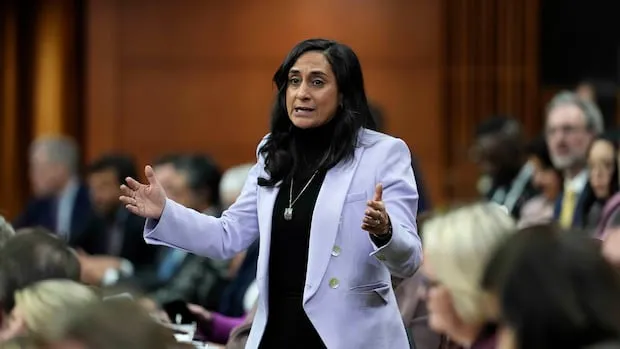
“This discriminatory law adds to a growing list of actions which enables illegal settler violence while dehumanizing the Palestinian people,” stated Anita Anand, Canada’s Minister of National Defence, following the recent passage of a controversial law in Israel that allows for the death penalty for Palestinians convicted of murdering Israelis.
On March 31, 2026, Israel’s Knesset voted 62-48 to approve this law, which mandates that the death penalty by hanging will be the default sentence for Palestinians convicted in West Bank military courts. The law applies only to future cases, meaning it is not retroactive, yet it has already ignited a firestorm of criticism from various international bodies and human rights organizations.
Critics argue that the law is inherently discriminatory as it does not apply equally to Israeli citizens. The European Union, Amnesty International, and B’Tselem have all condemned the legislation, emphasizing that it establishes a two-tiered system of justice between Israelis and Palestinians. Volker Turk, the United Nations human rights chief, remarked, “The death penalty becoming the default punishment for Palestinians in the occupied territory was patently inconsistent with Israel’s international law obligations.”
The law allows for executions to be carried out by prison guards appointed by the Israeli Prison Service and imposes severe restrictions on access to legal counsel and family visits for those sentenced to death. Adam Coogle, a representative from Human Rights Watch, expressed grave concerns, stating, “The death penalty is irreversible and cruel. Combined with its severe restrictions on appeals and its 90-day execution timeline, this bill aims to kill Palestinian detainees faster and with less scrutiny.”
Since the beginning of the war in Gaza in October 2023, approximately 72,000 Palestinians have been killed, and 172,000 have been wounded. Currently, around 9,500 Palestinians are held in Israeli prisons, including 350 children and 73 women. The new law is seen as part of a broader push by Israel’s far right to escalate punishment for Palestinians, further complicating an already tense situation.
As the law is set to take effect in 30 days, its implementation could be delayed by pending court proceedings at Israel’s highest tribunal. This uncertainty adds to the already fraught atmosphere surrounding the legislation, with many advocates calling for urgent intervention from the international community.
Erika Guevara-Rosas, a prominent human rights advocate, stated, “This new law, which allows for state-sanctioned executions, is a culmination of such policies.” The implications of this law extend beyond the immediate legal framework, raising profound questions about justice, human rights, and the future of Israeli-Palestinian relations.
What observers say
As the world watches, the reactions to this law continue to pour in. Many see it as a dangerous precedent that could lead to further violence and a breakdown of any remaining trust between the two communities. The international community remains on alert, with calls for accountability and respect for human rights echoing louder than ever.