Key moments
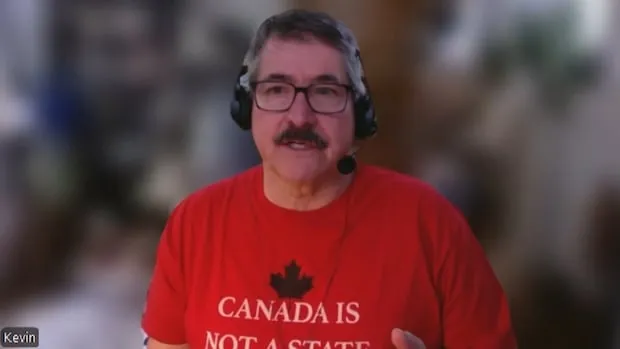
In a troubling incident at the Blue Water Bridge in Sarnia, Ontario, a Canadian man, Kevin Larson, was held for three hours by U.S. Customs and Border Protection (CBP) and compelled to provide a DNA sample. The event unfolded on October 18, 2025, as Larson attempted to enter the U.S. to attend a rally in Port Huron, Michigan.
The 68-year-old retired nuclear power plant employee was reportedly told that he could face charges if he refused to comply with the DNA request. Larson, who possessed a valid Canadian passport, expressed confusion and frustration over the reasoning behind his denial of entry, which was cited as ‘insufficient evidence’ for his intended purpose.
Larson’s experience has raised significant concerns about the treatment of individuals at the border, particularly regarding privacy rights. “I said, ‘No, I consider that a privacy thing. I’m not going to do it,'” Larson recounted, highlighting the distressing nature of the situation. Ultimately, he complied with the request to avoid a longer-term ban from entering the U.S.
U.S. Representative Debbie Dingell, along with Congressman Jamie Raskin, has voiced outrage over the incident, emphasizing the potential damage to the relationship between the U.S. and Canada. Dingell stated, “This kind of hostile and arbitrary treatment at the border could further damage one of our most important bilateral relationships.” She also pointed out that there was no evidence of any pending warrants or criminal history against Larson, questioning the legality of the DNA collection.
The directive under which CBP operates allows for DNA samples to be collected from individuals arrested on federal charges, a policy that has come under scrutiny in light of Larson’s case. Dingell and Raskin have sent a letter seeking clarification on the legal justification for taking Larson’s DNA, but as of now, they have not received any answers.
Larson’s experience is not an isolated incident; it reflects broader tensions in U.S.-Canada relations, which have been strained due to various policies from previous administrations. As a result of this incident, Larson has indicated that he plans to avoid future trips to the U.S. until there is a change in administration.
As the situation unfolds, many community members and lawmakers are left questioning the implications of such border practices on personal freedoms and international relations. Details remain unconfirmed regarding the specific legal frameworks that allowed for this incident, but the call for transparency and accountability is growing louder.