Introduction
The discovery of interstellar comet 3I Atlas has captivated the scientific community and astronomy enthusiasts alike. This unique celestial object, known for its origin beyond our solar system, sheds light on the complexities of our universe, offering insights into the formation and migration of celestial bodies. As research continues, the importance of studying such interstellar visitors becomes increasingly clear.
Details on Comet 3I Atlas
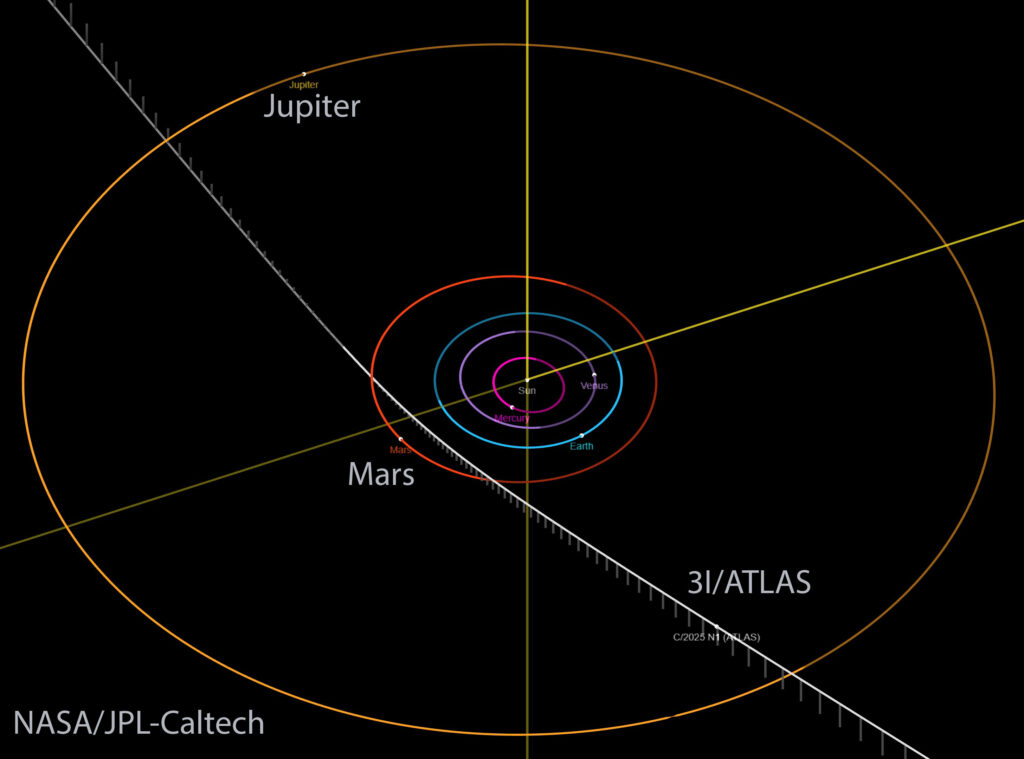
Discovered in 2021, comet 3I Atlas (also referred to as C/2021 E3) stands out as one of the few confirmed interstellar comets. It approaches the inner solar system and provides a rare opportunity for researchers to study its composition and behavior. The comet has been observed traversing the orbit of Jupiter, and as it nears the Sun, its ice and gas are likely to vaporize, creating a spectacular tail that reflects sunlight.
Analysis of early images and data gathered by astronomical observatories suggests that 3I Atlas is composed primarily of ices and organic materials, hinting at the molecular complexity present in interstellar environments. This leads scientists to theorize that comets like Atlas could potentially carry the building blocks of life, given their primordial materials formed in different star systems.
Upcoming Events and Observations
As 3I Atlas continues its journey towards perihelion — its closest approach to the Sun — astronomers are gearing up for significant observation campaigns. Multiple observatories around the globe, including the Hubble Space Telescope and ground-based telescopes, will capture detailed images of the comet and analyze its behavior as it undergoes outbursts of activity. The expected peak visibility for amateur astronomers is anticipated during early 2024.
Significance and Conclusion
The study of interstellar comet 3I Atlas not only enriches our understanding of the solar system but also offers a unique glimpse into the conditions of other star systems. As more interstellar objects are discovered, they provide critical data that may answer fundamental questions about the formation of planets and the origins of life. The scientific community remains hopeful that the observations and studies of 3I Atlas will lay groundwork for future exploration and understanding of the cosmos.
In conclusion, interstellar comet 3I Atlas presents an invaluable research opportunity as it makes its way through our solar system. As it approaches Earth, we stand to learn much about comets and interstellar matter, revealing secrets that may have implications for understanding our place in the galaxy.