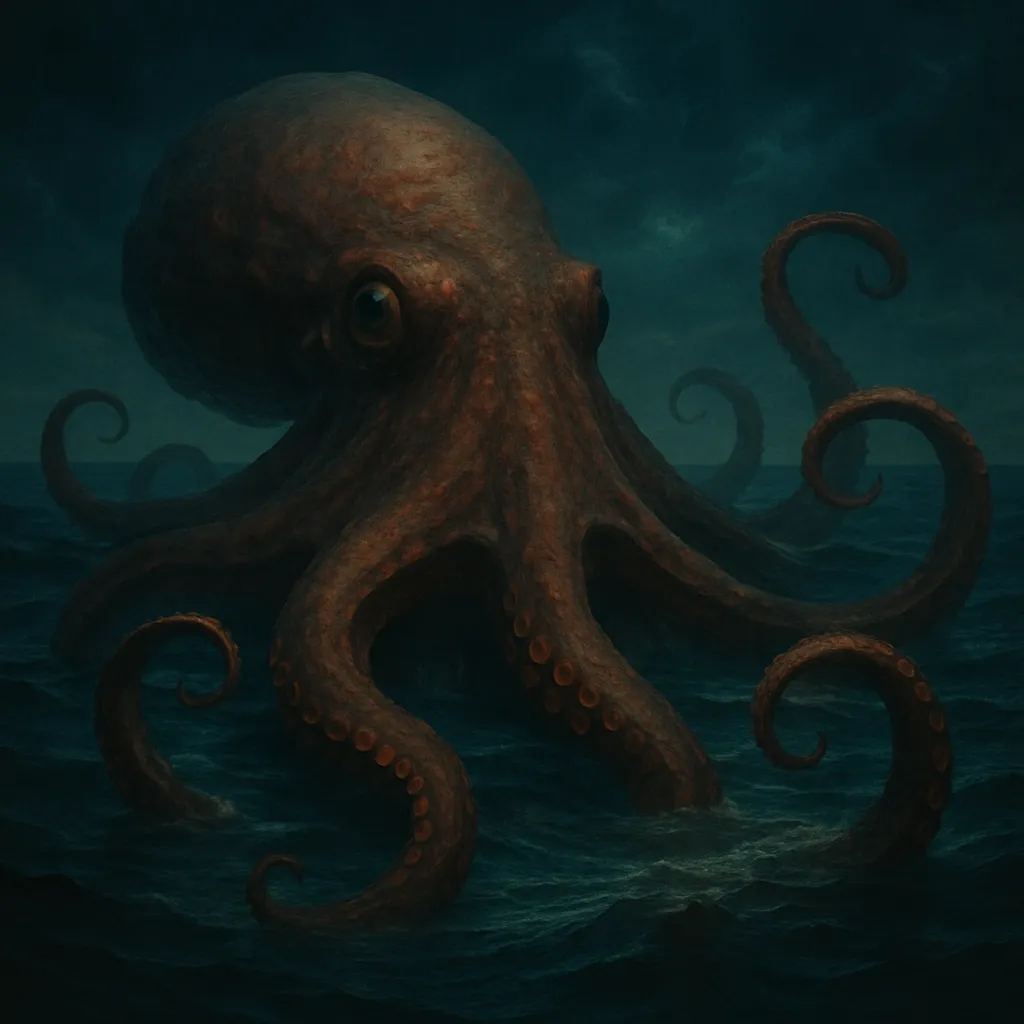
“They were giant predators at the very top of the Cretaceous marine food web,” says Yasuhiro Iba, a researcher involved in a groundbreaking study on ancient octopuses. This research reveals that some giant octopuses reached astonishing lengths of up to 19 metres, prowling the seas during the Age of Dinosaurs.
These colossal creatures, including the species Nanaimotethis haggarti, may have been among the largest invertebrates in Earth’s history. Fossils unearthed on Vancouver Island in British Columbia and Hokkaido, Japan, showcase fossilized beaks that provide insight into their predatory behavior.
The study indicates that these ancient octopuses lived between 100 million and 72 million years ago. As top predators, they played a crucial role in shaping the Cretaceous marine food web, interacting with formidable contemporaries like mosasaurs and plesiosaurs.
Dr. Thomas Clements, another researcher on the team, expressed his awe at these findings: “To see a beak this size is quite amazing, to be honest. It was a massive animal.” The fossils reveal distinct wear patterns on the beaks—suggesting these animals routinely crushed hard bones and shells, showcasing their strength.
What’s more intriguing is that the wear appeared more pronounced on one side of the beak. This indicates not only power but also behavioral sophistication—“This indicates that these animals were not only powerful, but also behaviourally sophisticated predators,” Iba explains.
The study relied heavily on detailed analysis of these fossilized beaks—the only rigid part of an octopus’s body—offering a rare glimpse into their evolutionary history. Despite being largely shrouded in mystery due to the scarcity of octopus fossils, this research sheds light on how these creatures evolved as apex predators.
As scientists continue to explore Cretaceous ecosystems, findings like these remind us of the complex interactions that existed millions of years ago. The legacy of giant octopuses challenges our understanding of marine life during a time dominated by dinosaurs and predatory marine reptiles.