Key moments
In a significant development regarding firearm regulations, Alberta has declared over 7,000 banned weapons as part of Ottawa’s gun buyback program. This initiative, which aims to remove firearms deemed dangerous from circulation, has sparked varied responses across Canada, particularly in Alberta and Saskatchewan.
As of March 31, Public Safety Canada reported that more than 67,000 banned guns have been declared by 37,869 firearm owners nationwide. However, Alberta’s government has firmly resisted participation in the federal program, directing provincial entities to decline involvement. Alberta’s Minister of Public Safety, Mickey Amery, stated, “Alberta’s government stands by its decision not to participate in the federal firearm confiscation program.” This resistance highlights a growing divide between provincial and federal approaches to gun control.
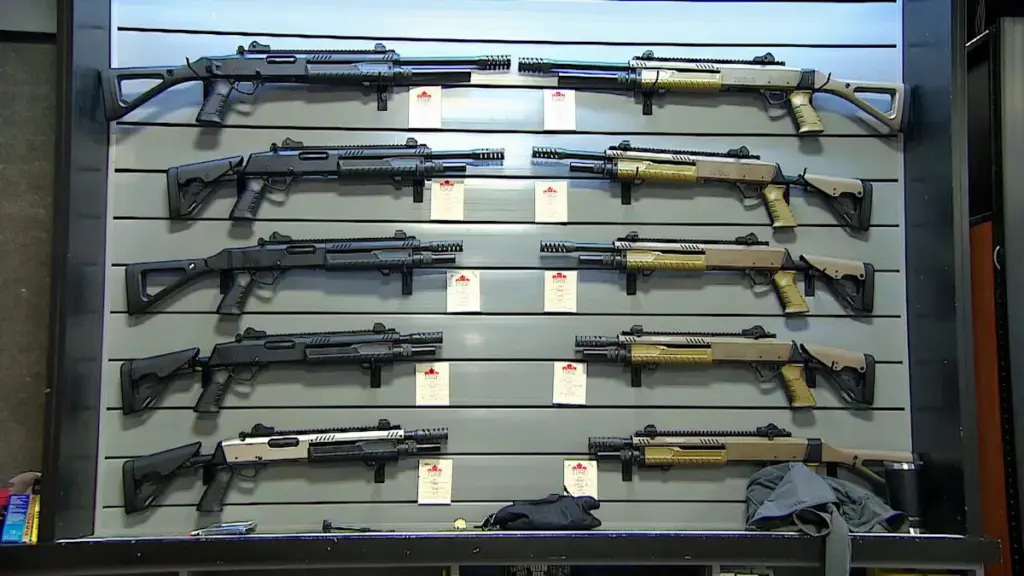
Ottawa has banned approximately 2,500 types of firearms, arguing that these weapons are designed for warfare rather than hunting or sport shooting. Despite the federal government’s expectations that 136,000 assault-style firearms would be declared, only 47,000 have been reported thus far. Saskatchewan, in particular, has the lowest per capita participation in the gun buyback program, with only 793 guns declared as of March 19.
Gun owners in both provinces face a looming deadline: they must dispose of or deactivate prohibited firearms by October 30, regardless of their participation in the compensation program. Failure to comply could lead to criminal sanctions and the loss of firearm possession licenses. This requirement has left many gun owners in a state of uncertainty, especially in Alberta, where details regarding compensation for those who participated in the buyback program remain unconfirmed.
Gary Anandasangaree, the Parliamentary Secretary to the Minister of Public Safety, expressed concern over Alberta’s decision, noting, “It means that the citizens who are law-abiding and who have enrolled in the program, regrettably, will not be eligible for compensation.” This statement underscores the potential consequences for those who choose to comply with federal regulations.
Critics of the program, including Tracey Wilson from the Canadian Coalition for Firearm Rights, argue that the bans are politically motivated rather than focused on public safety. Wilson remarked, “The government never actually had the intention of collecting firearms from people. The bans were largely political, and the minister admitted as much.” This sentiment reflects a broader skepticism among some firearm owners regarding the government’s intentions.
As the deadline approaches, many are left wondering about the implications of the gun buyback program on community safety. Kendrick Walker, a local gun owner, shared his concerns, stating, “There is a little bit of a grey area there. We’re still waiting to see precisely what that means in terms of compensation.” The uncertainty surrounding the program continues to fuel discussions within communities in Alberta and Saskatchewan.
As the situation develops, the responses from local communities and governments will play a crucial role in shaping the future of firearm regulations in Canada. The ongoing dialogue between federal and provincial authorities, along with the voices of concerned citizens, will be vital in navigating this complex issue.