Introduction
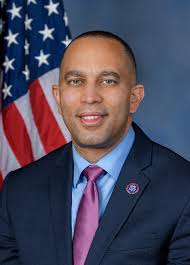
Hakeem Jeffries has emerged as a prominent figure in American politics, especially following his recent election as the House Democratic leader. His rise to this influential position is especially significant for the Democratic Party as it seeks to navigate a challenging political landscape. In a time when political polarization is at an all-time high, Jeffries’ leadership could influence not just legislative priorities but also the party’s image among voters.
The Political Journey of Hakeem Jeffries
Consequently, it’s important to examine Hakeem Jeffries’ background. Born in Brooklyn, New York, in 1970, Jeffries graduated from Binghamton University and earned his Juris Doctor from New York University School of Law. His legal career and work in various progressive causes laid the foundation for his entry into politics. Elected to the U.S. House of Representatives in 2012, he has held strong stances on issues such as healthcare, criminal justice reform, and voting rights.
Leadership Style and Significant Policies
Jeffries’ leadership style is characterized by unity and pragmatism. He has consistently focused on building coalitions within Congress to advance legislative agendas. During his tenure in the House, he has played a vital role in significant initiatives, including the Affordable Care Act and efforts to strengthen gun control measures. His emphasis on progressive policies aims to appeal to a younger, more diverse electorate and reflects the evolving priorities of the Democratic Party.
Recent Developments
Since taking the helm as the House Democratic leader, Jeffries has faced immediate challenges, including negotiations over the budget and party cohesion in the wake of a challenging election cycle. His ability to navigate bipartisan issues will be critical in maintaining Democratic influence and effectiveness. Furthermore, with the looming presidential elections, Jeffries’ strategies on key issues will likely play a pivotal role as Democrats prepare for the upcoming battle at the polls.
Conclusion
In summary, Hakeem Jeffries represents not only a fresh face in leadership but also a bridge between varying factions of the Democratic Party. His approach could reshape political strategies and influence upcoming legislative outcomes significantly. As American politics continues to evolve, Jeffries’ role might determine not just the trajectory of the Democratic Party, but also the broader political landscape in the United States. Observers will be watching closely to see how his leadership unfolds and what it means for the future of American governance.