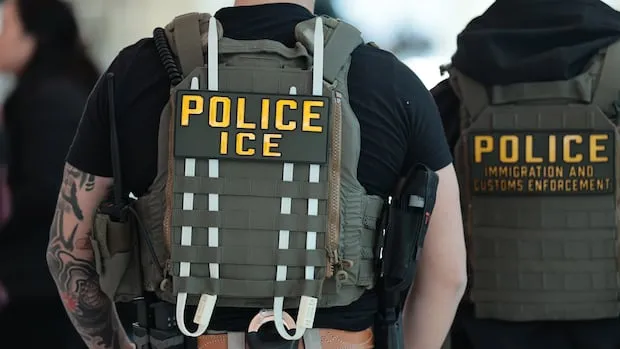
What does the presence of U.S. Immigration and Customs Enforcement (ICE) in Canada mean for local communities, especially in light of the upcoming World Cup? While ICE agents do not have authority on Canadian soil, their involvement raises significant concerns among residents and advocacy groups.
ICE has five offices in Canada, located in major cities such as Toronto and Vancouver. Despite their presence, Canadian officials assert that ICE has no jurisdiction here. This has led to a complex relationship between U.S. immigration enforcement and Canadian communities, particularly as Canada prepares to co-host the World Cup alongside the United States and Mexico.
In Toronto, city council has taken a stand against ICE’s presence during the World Cup, passing a motion that opposes their involvement at the games. With thirteen matches scheduled in Toronto and Vancouver, the potential for ICE personnel to provide security has sparked fear among many residents. An Amnesty International report highlights that the U.S. team may play in Canada during later rounds, raising questions about the implications of ICE’s role in such events.
Community members are concerned that ICE’s presence could send a chilling message, discouraging participation in local events. Research indicates that 30% of Latino youth avoid daily activities due to fear of enforcement, a statistic that underscores the anxiety felt in immigrant communities. The emotional toll of such fears can be profound, as children experience trauma from enforcement actions near schools, disrupting community cohesion.
What the data shows
ICE has been embroiled in controversy, facing lawsuits over aggressive tactics and alleged civil rights violations while enforcing immigration laws in the U.S. Since January 2025, at least three dozen individuals have died in ICE custody, further fueling criticism of the agency. The chilling effect of ICE’s operations is evident, with many families fearing separation due to recent HUD rule changes that threaten eviction unless undocumented members are removed.
As the World Cup approaches, the tension between the need for security and the rights of individuals remains a pressing issue. An ICE spokesperson stated, “HSI special agents do not conduct operational activities in Canada, such as making arrests or executing search warrants,” yet the mere presence of ICE can evoke fear and uncertainty within communities.
Voices from the community reflect a desire for understanding and acceptance. One author poignantly noted, “My fear is a rational response to an irrational climate, but it does not have to be our reality for much longer.” This sentiment resonates deeply as communities strive for a future where their identities are celebrated rather than vilified.
As Canada navigates its role in the World Cup and the implications of U.S. immigration policies, the future remains uncertain. Advocacy groups continue to call for a reassessment of ICE’s presence and its impact on local communities. The conversation around immigration in Canada is evolving, and it is crucial for all voices to be heard as the nation moves forward.