Background of the Conflict
Ayatollah Ali Khamenei served as Iran’s supreme leader for 37 years until his death on February 28, 2026, during a U.S.–Israeli strike on Tehran. His passing marked a pivotal moment in the region, leading to the appointment of his son, Mojtaba Khamenei, as the new supreme leader. This transition has been met with significant unrest and escalated military actions from Iran, particularly against Israel and its Gulf neighbors.
Recent Developments
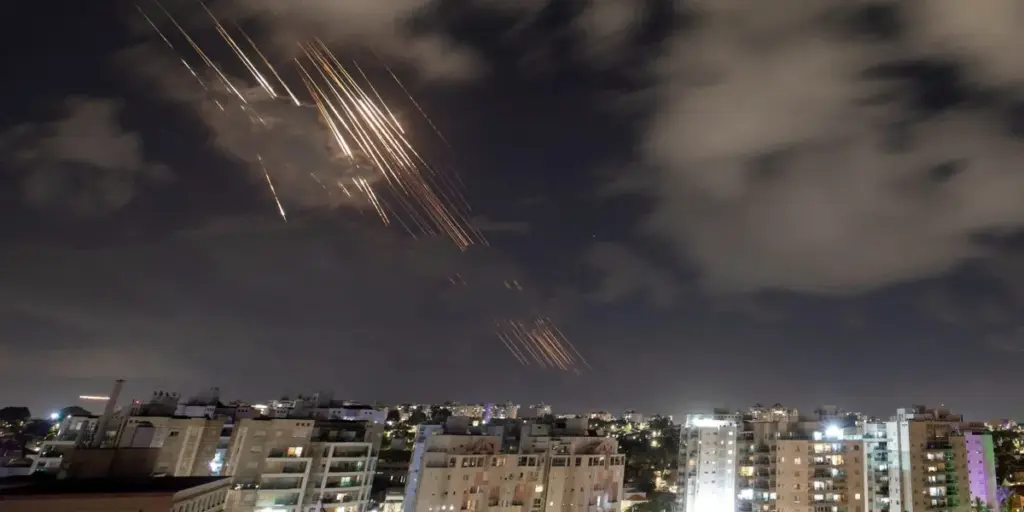
On March 9, 2026, Iran launched a series of attacks targeting Israel and several Gulf states, including Bahrain, Saudi Arabia, and Qatar. This aggressive military posture followed the formal announcement of Mojtaba Khamenei’s leadership, signaling a shift in Iran’s approach to regional conflicts. The attacks have resulted in over 1,200 deaths in Iran, nearly 400 in Lebanon, and 11 in Israel, marking a dramatic escalation in hostilities.
Casualties and Impact
The ongoing conflict has also claimed the lives of seven U.S. service members, raising concerns about the broader implications for U.S. involvement in the region. In Bahrain, the state oil company declared ‘force majeure’ on its operations due to the conflict, highlighting the economic ramifications of the violence. Additionally, crude oil prices have surged, briefly nearing $120 a barrel, reflecting market instability amid the crisis.
Reactions from Regional Powers
Saudi Arabia’s Foreign Ministry issued a statement affirming the Kingdom’s right to take necessary measures to protect its security and sovereignty. This statement underscores the heightened tensions and the potential for further military responses from regional powers. Meanwhile, Qatar’s government has issued alerts regarding missile threats targeting the state, and Turkey intercepted a ballistic missile launched from Iran that entered its airspace.
International Responses
In the wake of these developments, U.S. officials have expressed concern over the escalating violence. Senator Lindsey Graham cautioned against the selection of targets in the conflict, urging careful consideration to avoid further escalation. The international community is closely monitoring the situation as the potential for broader conflict looms.
As the situation evolves, observers are left to speculate on the next steps for both Iran and Israel. The Assembly of Experts in Iran has voted to appoint Mojtaba Khamenei as the Islamic Republic’s third leader since its founding in 1979, indicating a potential shift in Iran’s strategic direction. However, the ongoing violence and rising casualties suggest that the conflict may continue to escalate, with significant implications for regional stability.
The Israel Iran attack represents a critical juncture in Middle Eastern geopolitics, with the potential to reshape alliances and provoke further military actions. As both sides prepare for what may come next, the international community watches closely, hoping for a resolution to the escalating conflict.