The numbers
On March 15, 2026, during a Premier League match at Selhurst Park, chants referencing the disgraced television personality Jimmy Savile were audible among Leeds United supporters. This incident has sparked outrage, with the Leeds United Supporters’ Network condemning the chants as inappropriate and stating that they do not belong in football or society.
In response to the incident, Leeds United is advocating for the Crown Prosecution Service to classify such songs as tragedy chanting, which could lead to further action against those who participate in such behavior. Savile, who was born in Leeds, had no affiliation with Leeds United, yet his name continues to evoke strong reactions due to his notorious past.
Jimmy Savile was a prominent British television personality known for hosting shows like Top of the Pops and Jim’ll Fix It. However, following his death in 2011, it was revealed that he had abused hundreds of individuals over a span of six decades. The posthumous investigation led to over 2000 criminal offence charges being filed against him, including rape and sexual assault, making his name synonymous with institutional abuse and predatory behavior in the UK.
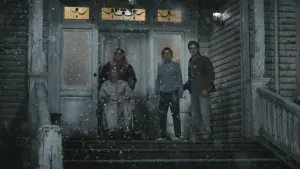
In popular culture, Savile’s legacy has been complicated. The character Sir Jimmy Crystal in the film 28 Years Later is intentionally based on him, highlighting the ongoing conversation about his impact on society. Interestingly, American audiences often view costumes inspired by Savile as mere fun cosplay, largely unaware of his dark history.
Louis Theroux, who interviewed Savile in 2000 while making a documentary, later expressed his shock upon learning about the crimes that had gone undiscovered at the time. “Actually, when I met him, I was making a documentary, but his crimes had not been discovered,” Theroux stated, adding, “He’d been a serial sex offender, and not knowing at the time.” This revelation underscores the extent of Savile’s deception and the societal failure to recognize his predatory behavior.
The resurgence of Jimmy Savile chants at football matches has created a divide between British and American fan communities, with many in the UK finding the trend deeply offensive. As one observer noted, “Dressing as him is not just awkward. It’s deeply offensive to survivors scattered across Britain.” This sentiment reflects the ongoing struggle to reconcile Savile’s legacy with the cultural references that continue to emerge.
As the debate surrounding the appropriateness of such chants continues, observers are left to ponder the implications for football culture and the broader societal attitudes towards figures like Savile. Details remain unconfirmed regarding any potential legal actions that may arise from this incident, but the conversation around his legacy and the impact of his actions on survivors remains a critical issue.