Key moments
In a dramatic turn of events in Val-d’Or, Canada, on March 23, 2026, it has been revealed that Daniel Colin is the true leader of the paramilitary group Foxtrot, not Fedor Stavinsky. This revelation comes amidst a backdrop of escalating tensions, as Russians and Chinese forces have declared war on Canada, planning an invasion of the Canadian Arctic. The conflict has already seen several deaths, including that of soldier Luc Paré, who was killed by Colin during a violent exchange involving the missile M55.
The finale of the second season of a popular series has mirrored these real-life events, featuring intense combat and significant character deaths. Alexandre Laferrière, the show’s author, commented on the necessity of showcasing the harsh realities of war, stating, “It was essential to have deaths on both sides for credibility, especially with so many characters in Les armes.” This statement reflects the ongoing narrative that intertwines fiction with the stark realities faced by communities in the wake of conflict.
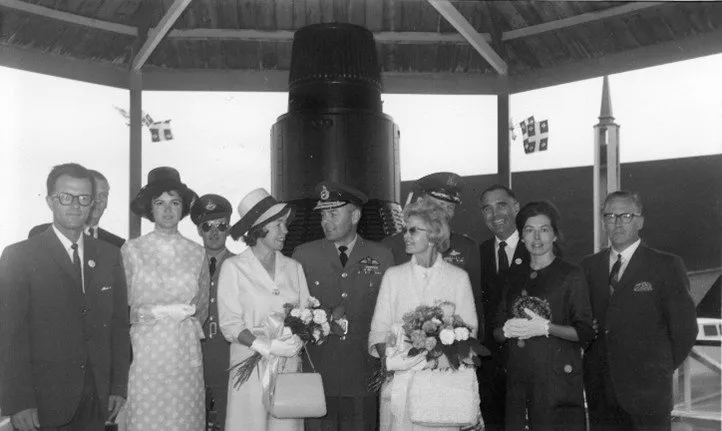
As the situation unfolds, the military base in Val-d’Or, established during the Cold War, has resurfaced as a focal point. Originally housing approximately 500 military personnel and 67 civilians in 1965, the base played a significant role in the local economy, fostering growth and community engagement through various activities, including organizing winter carnivals. The presence of nuclear weapons at this base is a lesser-known aspect of Quebec’s history, yet it underscores the long-standing military significance of the region.
The Canadian authorities have maintained that the weapons in question are purely defensive and do not constitute a provocation. This statement aims to reassure the local community amidst rising fears of military escalation. However, the uncertainty surrounding the fate of injured individuals like Ivan, who was shot during the conflict, adds to the community’s anxiety. Details remain unconfirmed regarding his survival, as well as the condition of Sergerie, who was gravely injured in the same incident that claimed Fedor’s life.
As Val-d’Or grapples with these developments, the community reflects on its historical ties to military presence and the implications of current events. The Cold War era, marked by heightened tensions, has left an indelible mark on the region, shaping its identity and economic landscape. The military’s involvement in local activities has fostered a sense of camaraderie, yet the current conflict poses new challenges that threaten this fragile peace.
In the wake of these revelations, community members are left to ponder the implications of having such a significant military history intertwined with their daily lives. The balance between safety and the potential for conflict weighs heavily on the minds of residents, as they navigate the complexities of a world where the lines between fiction and reality blur.
As the story continues to unfold, the people of Val-d’Or remain resilient, drawing strength from their shared history while facing an uncertain future. The ongoing conflict serves as a reminder of the delicate nature of peace and the importance of community solidarity in times of crisis.