Cuba has been grappling with significant challenges, largely attributing its struggles to a U.S. energy blockade that has severely impacted its health system, public transportation, and the production of essential goods and services. In this context, Cuban President Miguel Díaz-Canel has emerged as a key figure, navigating the complexities of international relations while advocating for his nation’s sovereignty.
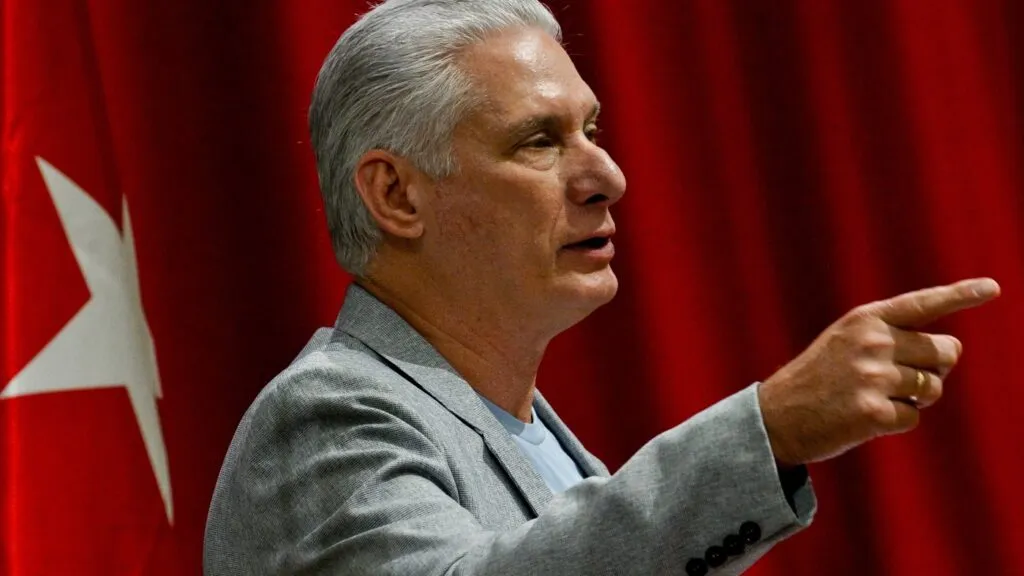
In a recent statement, Díaz-Canel addressed the escalating tensions with the United States, asserting that there is no valid reason for the U.S. to attack Cuba or seek his ouster. He warned that such an invasion would not only be costly but would also jeopardize regional security. “If that happens, there will be fighting, and there will be a struggle, and we will defend ourselves, and if we need to die, we’ll die, because as our national anthem says, ‘Dying for the homeland is to live,’” he declared.
The Cuban leader’s remarks come in light of the ongoing economic embargo imposed by the U.S. since 1962, which he described as “genocidal and cruel.” This embargo has led to Cuba producing only 40% of the fuel it consumes, with the country recently halting key oil shipments from Venezuela due to U.S. military actions.
Díaz-Canel emphasized that Cuba’s position is entirely defensive and not aggressive, stating, “Nobody has made those demands to us, and we have established that in respect to our political system or constitutional order, these are issues that are not under negotiations with the United States.” He also expressed Cuba’s openness to foreign investment in oil exploration and drilling, indicating a willingness to engage in dialogue without preconditions.
Despite the pressing issues, Díaz-Canel did not commit to releasing political prisoners during the interview, a point that has drawn criticism from various human rights organizations. Observers note that the situation remains delicate, with the potential for further escalation if diplomatic channels do not improve.
As the international community watches closely, the future of U.S.-Cuba relations hangs in the balance. Díaz-Canel’s firm stance reflects a broader sentiment among Cubans, who are determined to defend their homeland against perceived threats. The coming weeks may reveal more about the trajectory of these relations and the resilience of the Cuban people in the face of adversity.