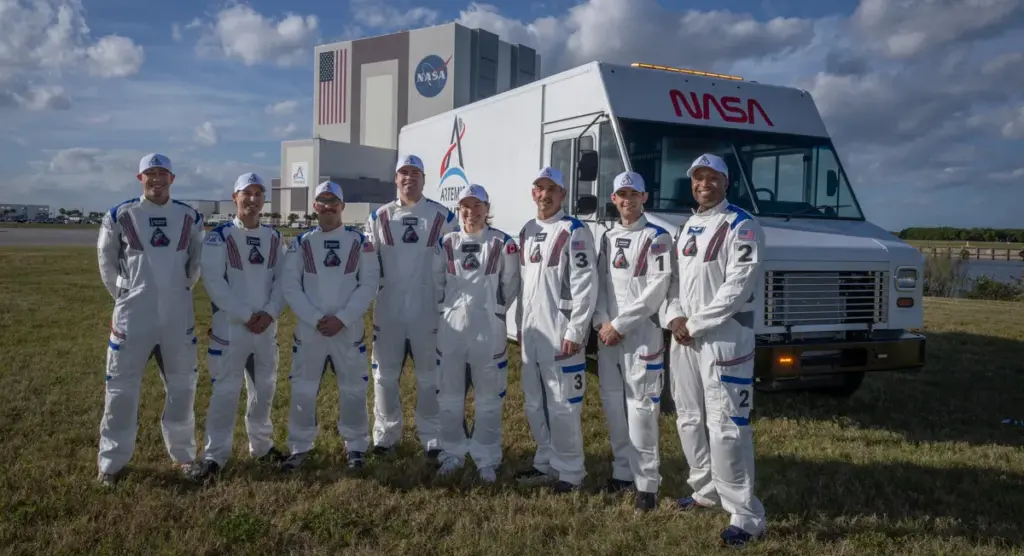
In a significant development for space exploration, NASA has announced that the Artemis II mission, scheduled for April 2, 2026, will feature a crew of four astronauts: Victor Glover, Reid Wiseman, Christina Koch, and Canadian astronaut Jeremy Hansen. This mission marks NASA’s first crewed lunar endeavor in over 50 years, following the historic Apollo 17 mission in December 1972.
The Artemis II mission is designed as a 10-day journey to the moon, where the crew will fly past the lunar surface but will not land. Instead, they will conduct critical tests aboard the Orion spacecraft, including a demonstration of CPR in zero gravity and deploying four CubeSats during their flight.
As they approach the moon, the crew will experience a loss of signal for approximately 30 minutes while on the far side, a unique challenge that underscores the complexities of deep-space communication. The mission will also set a distance record of about 405,000 kilometers into space, showcasing the advancements in technology since the last crewed lunar mission.
Reid Wiseman expressed the crew’s commitment to inclusivity, stating, “We really are going for all, by all, and we want to take the whole world along with us.” This sentiment reflects the broader goals of NASA’s Artemis program, which aims to pave the way for future lunar landings and exploration.
In addition to testing systems, the crew will focus on radiation shielding and manual piloting of the Orion spacecraft, as well as exploring laser communications as an alternative to traditional radio signals. These innovations are crucial for the success of future missions, including potential landings on the moon.
Jared Isaacman, a prominent figure in the space community, remarked, “After a brief 54-year intermission, NASA is back in the business of sending astronauts to the moon.” This mission not only signifies a return to lunar exploration but also emphasizes the importance of collaboration and technological advancement in the field.
As excitement builds in the community, many are looking forward to the Artemis II mission as a pivotal moment in space history. The crew’s journey will not only inspire future generations but also highlight the potential for international cooperation in space exploration.
With just six days remaining until the crew embarks on their journey, anticipation is palpable. The Artemis II mission promises to be a remarkable chapter in the ongoing story of human exploration beyond our planet.