Introduction
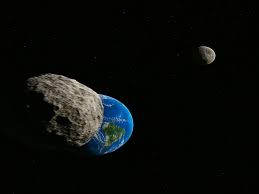
NASA has recently made a significant breakthrough in our understanding of celestial bodies within our solar system. The discovery of two moons orbiting Earth-like asteroids highlights the potential complexities of asteroid systems and their formations. This findings not only augment our knowledge of celestial mechanics but also potentially reshape our understanding of how moons can form around asteroids, further enhancing our explorations of our cosmic neighborhood.
Recent Discoveries
In the past few weeks, NASA’s Near-Earth Object (NEO) program has confirmed the presence of two small moons orbiting two separate Earth-like asteroids, designated as 1998 OR2 and 2020 HN1. The asteroids, both categorized as potential hazards due to their proximity to Earth, have been closely monitored by astronomers for more than two decades. The moons, measuring approximately 110 meters and 70 meters across, respectively, are relatively small but provide vital information regarding the formation and evolution of such celestial bodies. This finding is unprecedented, as it is one of the first instances of moons confirmed to orbit asteroids that pose orbits similar to Earth’s.
The Significance of the Findings
These discoveries raise intriguing possibilities about the dynamics of asteroid systems. Traditionally, moons are thought to primarily orbit larger planets, not smaller rocky bodies like asteroids. Thus, this challenges prevailing notions within astrophysics regarding celestial formation and the conditions required for moons to form. NASA representatives have expressed optimism about this revelation, indicating that such phenomena may be more common than previously thought. This could lead to further investigations into the evolution of smaller celestial bodies and their capabilities of hosting natural satellites.
Future Research and Implications
Following these discoveries, NASA plans to increase its observational efforts using advanced telescopes and radar, hoping to uncover additional details about these moons and their parent asteroids. The implications of this research extend beyond academic discourse, touching on future planetary defense strategies. Understanding the properties and potential risks associated with these asteroids will play a crucial role in safeguarding Earth from potential impacts. Moreover, knowledge gained could assist in the quest for future space missions, as these asteroids may harbor resources needed for sustainable human exploration beyond Earth.
Conclusion
The discovery of two moons orbiting Earth-like asteroids by NASA opens up a new horizon in planetary science. As researchers delve deeper into understanding these celestial elements, the knowledge acquired could prove invaluable in not only comprehending the origins and evolution of our solar system but also advancing human endeavors in space exploration. The possibilities seem boundless, leading us to ponder what else awaits discovery in the vastness of space.