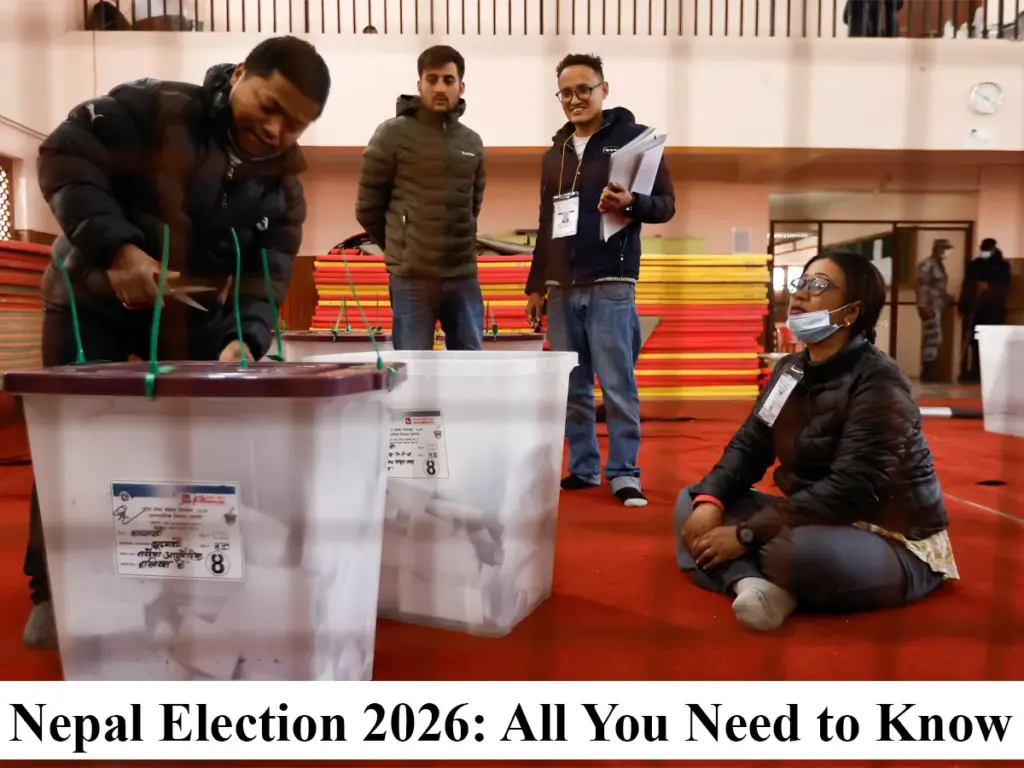
Nepal’s Election Update: March 2026
The nationwide election for the House of Representatives in Nepal, held on March 5, 2026, has emerged as a crucial test for the country’s democracy, particularly in the aftermath of violent protests that led to the resignation of Prime Minister KP Sharma Oli in September 2025. With nearly 19 million eligible voters, including around 800,000 first-time voters, the stakes were high as the nation sought to redefine its political landscape.
This election is the first national vote since the protests that resulted in the tragic loss of 77 lives, underscoring the urgency for change among the electorate. Polling stations were open from 07:00 to 17:00 GMT, and despite the significance of the event, voter turnout was reported at about 60%, marking the lowest participation rate in over two decades. This decline raises questions about public engagement and trust in the political process.
The election featured a diverse array of candidates, including veteran political figures and new entrants inspired by the recent protests. Among them, Balendra Shah, a former rapper, emerged as a frontrunner, capturing the attention of many voters eager for fresh perspectives. The Election Commission has indicated that outcomes for 165 first-past-the-post seats will be announced within 24 hours after the ballot boxes are collected, while counting for the proportional representation system may take an additional two to three days.
Despite the tense political climate, the election was conducted peacefully, with only a few minor incidents reported. Ram Prasad Bhandari, a local election observer, remarked, “The voting process has been concluded peacefully and enthusiastically,” reflecting a collective desire for stability and progress. Helicopters were even deployed to retrieve ballot boxes from remote, snowbound regions, demonstrating the logistical challenges faced in ensuring every vote was counted.
The backdrop of this election is significant, as the September 2025 uprising not only led to the resignation of KP Sharma Oli but also the establishment of an interim government. This context has heightened the importance of the election, with many viewing it as a pivotal moment for the future of Nepalese democracy. Sashi Gurung, a political analyst, stated, “This election is not a normal election. This is going to be one of the changing points for Nepalis, for Nepal.”
As the results begin to unfold, the implications of this election could reshape the political landscape of Nepal. Voters have expressed a strong desire for change, with many citing the sacrifices made during the protests. Shiv Shrestha, a young activist, noted, “So many people, including gen Z, sacrificed their lives,” highlighting the generational shift in political engagement and activism.
While the election has concluded, uncertainties remain regarding the final outcomes and the potential for coalition formations among the various political parties, including the Rastriya Swatantra Party and the Nepali Congress. Tek Bahadur Aale, a protest leader, poignantly remarked, “At the Gen Z protest, people died — and their blood will bring change, we hope,” emphasizing the hope for a new political era.
Details remain unconfirmed as the nation awaits the official results and the subsequent reactions from the political parties involved. The coming days will be critical in determining how Nepal navigates this transitional phase and what it means for its democratic future.