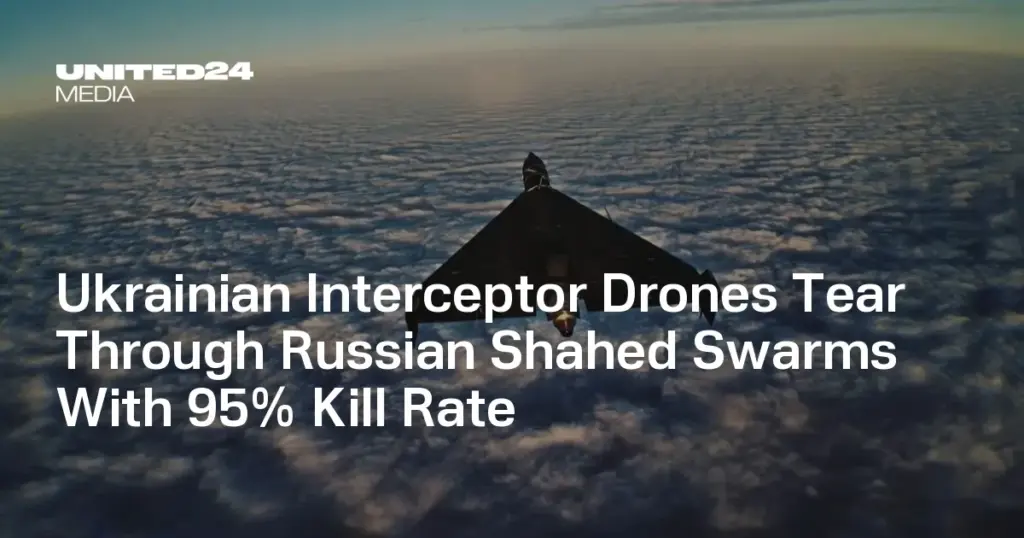
In recent months, the Kharkiv region of Ukraine has witnessed a troubling increase in the use of Russian Shahed drones. These unmanned aerial vehicles, often equipped with explosives, pose a significant threat to both military and civilian targets. As Ukraine continues to grapple with the ongoing conflict, the development of private air defense units has become crucial in safeguarding communities against these aerial assaults.
On April 17, 2026, Ukrainian forces celebrated a notable victory when they successfully intercepted a high-speed jet-powered Shahed drone. This marked the first time such a drone was brought down—an achievement that underscores the evolving nature of warfare in the region. The intercepted drone was traveling at speeds exceeding 400 km/h, demonstrating the advanced capabilities of Russian technology.
The effectiveness of Ukrainian air defenses is striking. Interceptor drones have achieved a remarkable 95% success rate against Shahed drones. In just one day, crews managed to eliminate 20 of these threats. A Ukrainian pilot known as “Hulk” shared his experience: “It’s extremely difficult to achieve that kind of number now. You have to approach the warhead with precision to destroy it in the air, so that at most only the engine reaches the ground, which basically doesn’t detonate.” His sentiment reflects not only the technical skill required but also the immense pressure they face.
Ukrainian forces have destroyed around 200 targets since bolstering their air defense strategies—184 of which were Shahed drones. This impressive tally is not just numbers; it represents lives saved and communities protected from destruction. The stakes are high; every successful interception means fewer threats to civilians and infrastructure.
Yet, as Mykhailo Fedorov noted, this escalation presents “a new level of complexity.” The introduction of guided Shahed drones specifically targeting mobile fire groups complicates an already challenging situation for Ukrainian defenses. With each new tactic employed by Russian forces, Ukrainian pilots must adapt swiftly to maintain their edge.
Interestingly, these Shahed drones are equipped with Tele2 SIM cards for communication purposes—though roaming is blocked in Ukraine. This detail underscores a broader issue: Serhii ‘Flash’ Beskrestnov commented on the need for global telecommunications companies to sever ties with operators aiding Russia’s military efforts. “I believe that mobile and fixed-line operators across the civilized world should terminate business relations with an operator used by the Russian Federation for terrorist purposes,” he stated firmly.
The future remains uncertain as both sides continue to innovate and adapt. Observers are keenly watching how Ukrainian air defenses will evolve in response to these new threats while hoping that international pressure can curtail support for Russia’s military operations.