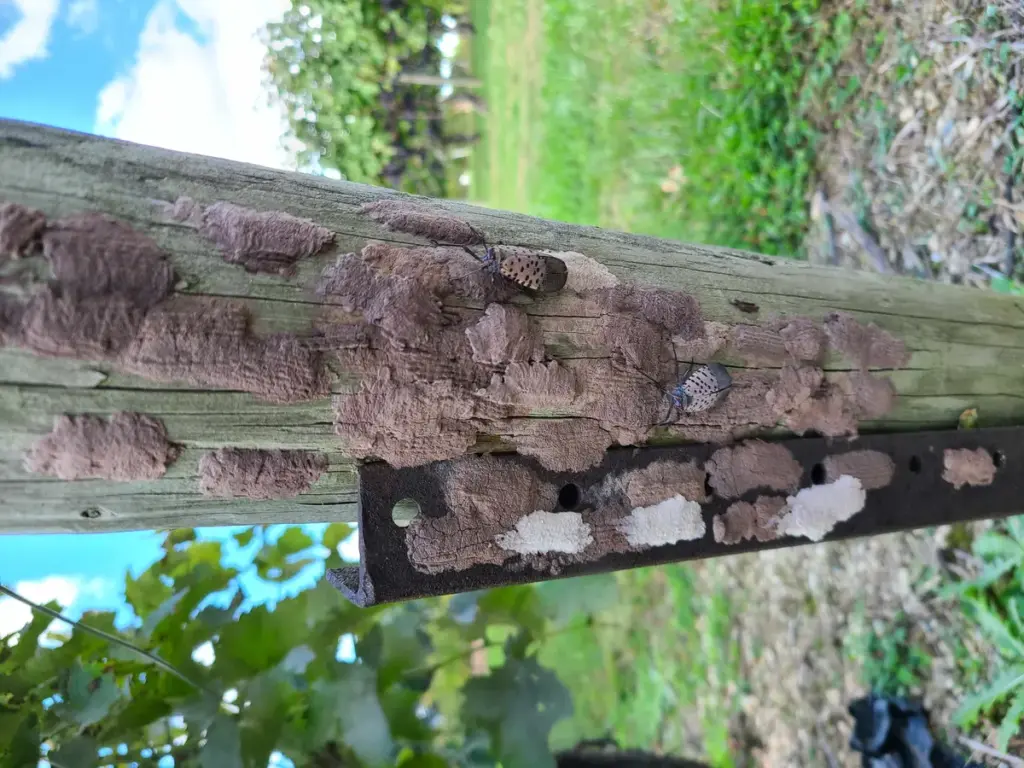
Aidan Dagg, a self-proclaimed bug enthusiast, recently discovered a dead spotted lanternfly in St. Catharines, Ontario. “I’m a huge bug nerd. It’s one of the coolest-looking bugs we have; it just really sucks that it’s invasive,” he said. This sighting has triggered alarms about the insect’s potential threat to Ontario’s vital grape and wine industry.
The spotted lanternfly, native to southeastern Asia, was first detected in the United States in 2014 and has since spread to 19 states. While there are no established populations in Canada yet, experts warn that its presence could lead to significant damage to vineyards and fruit trees across the province.
According to Diana Mooij from Natural Resources Canada, “The spotted lanternfly can feed on more than 100 species of trees and plants and poses a significant threat to the grape and wine industries.” With Ontario’s grape and wine sector valued at $5.4 billion, the stakes are high.
Chris Duyvelshoff from the Invasive Species Centre noted that this pest travels easily. “It really goes to show with this invasive species is the route of transportation of it. It’s a pest that’s very much moving based on human activity,” he explained. The insect can hitch rides on vehicles and shipments, making it difficult to control.
The economic impact can be severe. In Pennsylvania alone, infestations have led to annual losses of $50.1 million, with projections soaring to $554 million if they continue to spread unchecked. As officials monitor this situation closely, local farmers remain anxious about what might come next.
Emily Posteraro, a vineyard owner, expressed her concerns: “We have a $5.4 billion grape and wine industry. That’s at stake, but we don’t know the numbers.” Farmers are now looking for effective pest control strategies as they brace for potential invasions.
The spotted lanternfly’s resilience adds another layer of complexity; it can survive both hot summers and cold winters. This adaptability raises questions about how long it might take for this pest to establish itself if it does cross into Canada.
As communities rally for awareness and prevention measures, Dagg’s discovery serves as a timely reminder of nature’s delicate balance—and how quickly it can shift with the introduction of invasive species.