The numbers
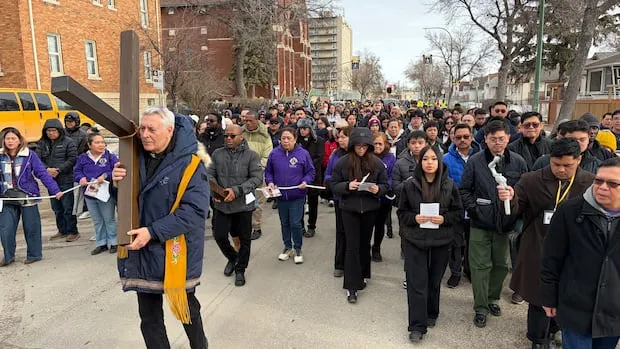
The annual Way of the Cross procession in Winnipeg saw close to 3,000 attendees this year, a testament to the enduring faith and community spirit among local Catholics. This year’s event, hosted by a different parish within the Catholic Archdiocese of Winnipeg, marks 37 years of this cherished tradition, which commemorates the suffering and death of Jesus Christ through 14 significant stations.
Archbishop Murray Chatlain, who led the procession, reflected on the profound meaning of the day, stating, “It’s maybe the darkest day in all of history when Jesus, if we trust and believe that he’s God, that we put him to death.” His words resonated deeply with participants, who gathered not only to remember but also to find solace in their shared faith.
Laiza Hermoso, a participant, added a note of hope amidst the solemnity, saying, “In every problem that we are facing right now, God is with us and he loves us.” This sentiment echoed throughout the procession, as attendees walked in solidarity, reflecting on the trials faced by Jesus and their own lives.
The Way of the Cross is a spiritual pilgrimage that recalls Jesus’ death and burial, drawing inspiration from the tradition that has been observed for centuries. Notably, Pope Leo XIV recently became the second Pope to carry the Cross for the entire Via Crucis at Rome’s Colosseum, where about 30,000 faithful joined him in prayer and reflection.
In a related event, the 2026 Way of the Cross in Saskatoon will carry the theme “One human family,” emphasizing unity and compassion among all people. This theme aligns with the core message of the Stations of the Cross, which invites participants to contemplate their connection to one another and to God.
The Colosseum, where Pope Leo XIV led the procession, was completed in 80 AD by Emperor Titus and holds a significant place in Catholic history, having been consecrated as a Catholic church. This historical backdrop adds depth to the observance of the Way of the Cross, reminding participants of the long-standing traditions that bind the Catholic community together.
As the procession concluded, prayers were offered, including an opening prayer at the Saskatoon event that expressed gratitude for the land and its resources: “Lord, we thank You for the gift of this land— for its beauty, its resources, and the lives it sustains.” This acknowledgment of nature and community highlights the interconnectedness of faith and the environment.
While the event in Winnipeg was a resounding success, details remain unconfirmed regarding future gatherings and how they may evolve. However, the spirit of the Stations of the Cross continues to inspire hope and reflection within the community, fostering a sense of belonging and shared purpose among all who participate.