“I am happy to see that in my land, people have risen in one voice and spoken – no to buying of votes, no to dynastic politics, and yes to a generational shift in politics,” said K. Annamalai, reflecting on the remarkable outcome of the recent Tamil Nadu elections held on May 4, 2026.
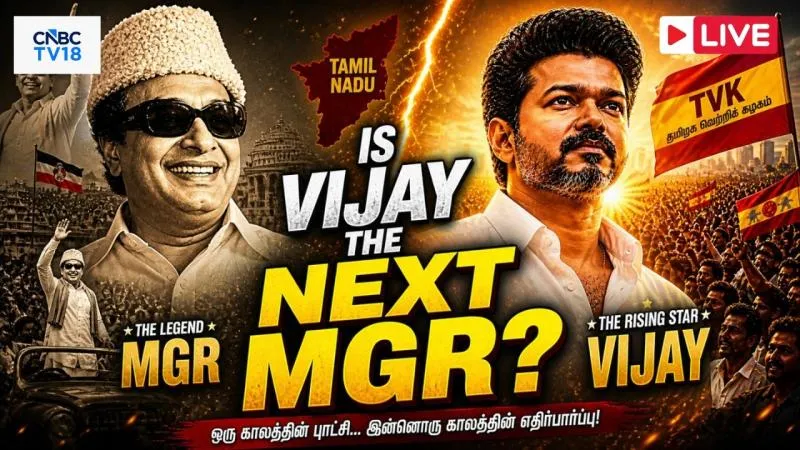
The Tamilaga Vettri Kazhagam (TVK), led by actor C. Joseph Vijay, has made a stunning debut by leading in 110 of the 234 constituencies. This marks a significant disruption to the long-standing political landscape dominated by Dravidian parties like the DMK and AIADMK.
As results poured in, TVK celebrated its success with jubilant supporters gathering outside their headquarters in Chennai. Vijay himself contested from two constituencies—Perambur and Tiruchirappalli East—and is currently leading in both. In fact, he is ahead by a margin of 6,499 votes in Tiruchirappalli East after the first round of counting.
The voter turnout for these elections reached an impressive 85.1 percent, the highest in Tamil Nadu’s history. The performance of TVK has been particularly notable across various demographics, cutting through traditional strongholds of rival parties.
Key statistics from the election:
- TVK secured 34.72 percent of the vote share, translating to approximately 1.18 crore votes.
- The DMK garnered around 24 percent, which amounts to about 84 lakh votes.
- The AIADMK-led alliance managed to capture 21 percent, equating to roughly 73.93 lakh votes.
- TVK has won 31 constituencies, while DMK and AIADMK secured 21 and 10 seats, respectively.
Sivakarthikeyan congratulated Vijay on this monumental achievement, stating that it was impressive for him to make such an impact in his first election. The results signify a potential shift away from traditional political practices that have characterized Tamil Nadu’s governance for decades.
This election not only highlights the rise of TVK but also reflects changing sentiments among voters who seem eager for new leadership styles and approaches. As more results come in and formalities are completed, political analysts will be keenly observing how this shift affects future governance in Tamil Nadu.