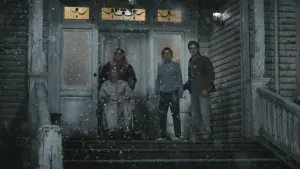
The KLDCS media arts team’s documentary is making waves as it prepares for its debut on Wild North Adventures TV. This marks the first time their work will be aired on a television network, a significant milestone for the students at Kirkland Lake District Composite School.
Over the past 18 months, the team collaborated with Englehart High School and Timiskaming District Secondary School to create an episode titled “the ultimate ice shake project.” The documentary chronicles the entire build of a large ice shack, showcasing teamwork and creativity among the students.
Shawna-Lee Enair-Fox, a member of the production team, praised her colleagues: “The production team here at KLDCS is just phenomenal.” The effort put into this project reflects their dedication to media arts and storytelling.
Chris Mallette, another student involved in the project, expressed enthusiasm about their work. “I think I could have made a five-hour documentary,” he said, highlighting the depth of content they explored during filming.
As this documentary prepares to air, it arrives at a time when Canadians are increasingly voicing their concerns about television services. Complaints about television services surged by 61% in 2026, with Rogers accounting for 34% of those complaints. Josee Bidal Thibault noted that this trend underscores the need for reliable channels for viewers facing issues.
Meanwhile, the Northern Collegiate Hockey Conference (NCHC) is also navigating its future in broadcasting. Heather Weems emphasized that revenue generation remains crucial as they seek partnerships that enhance exposure and distribution for their programming.
The airing of this documentary not only showcases the hard work of students but also highlights broader conversations around media production and viewer engagement in Canada. As these young filmmakers step into the spotlight, they contribute to an evolving landscape where local stories gain visibility.
With NCHC TV generating $1.19 million in profit for league members in 2025, it’s clear that there is a growing appetite for quality content within Canadian telecommunications. This documentary could very well inspire future collaborations among schools and local networks.