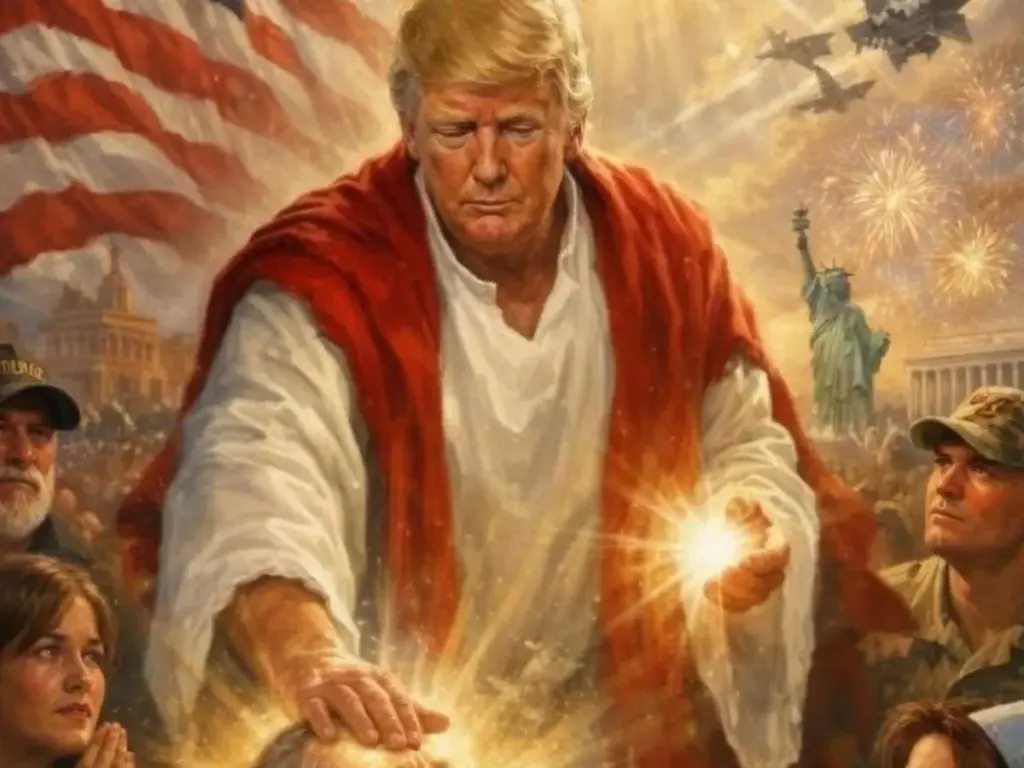
In a surprising turn of events, Donald Trump posted an AI-generated image of himself depicted as a Jesus-like figure on his Truth Social platform on April 13, 2026. The image showed Trump in a flowing white robe, placing a hand on a man’s head, which he later claimed was meant to represent him as a doctor associated with the Red Cross.
However, the post quickly drew backlash from various quarters, leading Trump to delete the image shortly after its release. Critics were swift to label the image as “blasphemy” and “outrageous,” with many expressing their discontent over the portrayal of faith in such a manner.
Church leaders, including Archbishop Paul S. Coakley, voiced their concerns, emphasizing that the Pope is not a politician and should not be subjected to such ridicule. Trump’s remarks about Pope Leo XIV, whom he criticized as “weak on crime,” further fueled the fire of discontent among religious communities.
Brilyn Hollyhand, a prominent voice in the community, stated, “This is gross blasphemy. Faith is not a prop,” reflecting the sentiments of many who felt that Trump’s actions were disrespectful to religious beliefs.
Riley Gaines, another critic, questioned Trump’s intentions, asking, “Does he actually think this?” Such reactions highlight the growing tension between Trump’s political persona and his relationship with Christian voters, a demographic that supported him strongly in the 2024 election.
Senator Bernie Sanders described Trump’s comments as “egomaniacal,” adding to the chorus of disapproval from both sides of the political spectrum. Megan Basham, a conservative commentator, expressed her bewilderment, stating, “I don’t know if the President thought he was being funny or if he is under the influence of some substance or what possible explanation he could have for this.”
This incident comes amidst ongoing tensions between the White House and the Vatican, which have been building for months. Trump’s previous sharing of an image of himself as pope after Pope Francis’s death adds a layer of complexity to his relationship with religious leaders.
As the community reacts to this latest development, many are left questioning the implications of such portrayals and the respect owed to faith and its symbols. The backlash indicates a significant divide in how Trump’s actions are perceived, particularly among those who hold their beliefs dear.
Details remain unconfirmed regarding the full impact of this incident on Trump’s political standing among Christian voters. However, the reactions thus far suggest that this controversy may resonate deeply within the community for some time to come.