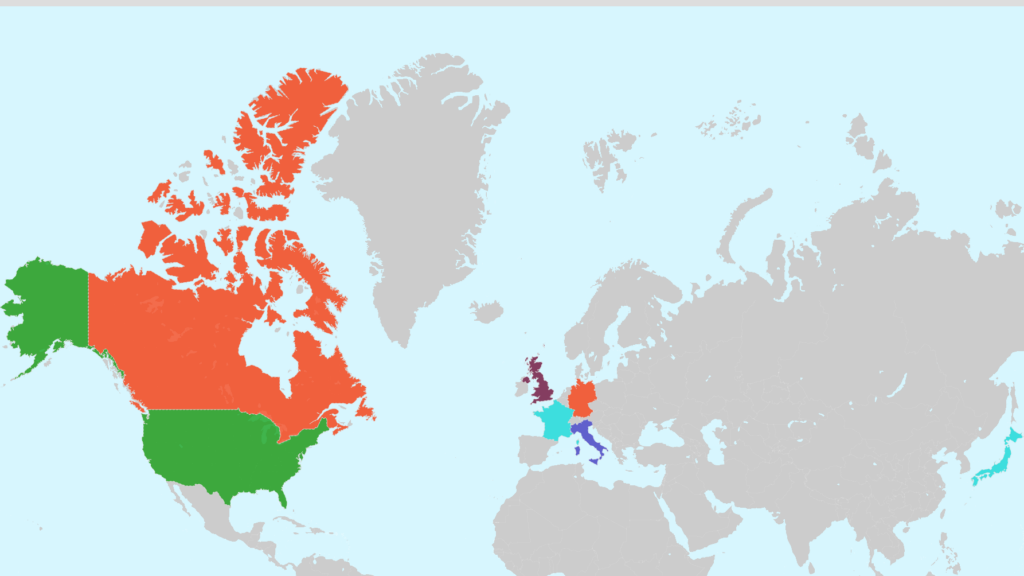
Introduction to the G7 Countries
The Group of Seven (G7) is an intergovernmental organization consisting of seven of the world’s largest advanced economies: Canada, France, Germany, Italy, Japan, the United Kingdom, and the United States. Established in the 1970s, the G7 serves as a platform for these countries to discuss and coordinate policies on a variety of global issues, including economic policy, international security, and climate change. As these nations represent approximately 40% of the global GDP, their collaborative efforts significantly shape global economic trends and geopolitical stability.
Current Events and Recent Summits
The G7 recently convened for their annual summit in Hiroshima, Japan in May 2023, where leaders discussed pressing challenges such as the ongoing conflict in Ukraine, the impact of inflation on the global economy, and the urgency of addressing climate change. The summit also highlighted the importance of fostering resilient supply chains and enhancing energy security, reflecting the need to mitigate vulnerabilities exposed by the COVID-19 pandemic and geopolitical tensions.
In response to global crises, the G7 has also aimed at fostering international cooperation. In particular, they committed to providing new financial assistance to Ukraine and to supporting efforts for global food security exacerbated by conflicts and climate-related disasters. The leaders also underscored the importance of promoting democratic values in the face of rising authoritarianism around the world.
The Significance of G7 Cooperation
Collaboration among the G7 countries holds great significance not only for their own economies but also for the international community. The decisions made in G7 meetings can influence global financial markets, international trade policies, and even security alliances. For instance, their collective stance on sanctions against Russia following its actions in Ukraine demonstrates how the G7 can mobilize to respond to threats to international order.
Conclusions and Future Outlook
As the G7 countries navigate an increasingly complex global landscape marked by economic uncertainty and geopolitical strife, their cooperation remains vital. Future summits will likely continue to address acute challenges such as climate change, health security, and economic inequalities, driving the G7 to seek broader collaborations with other nations and organizations. The effectiveness of G7 initiatives, such as their commitment to net-zero targets and shared security strategies, will be crucial in shaping a stable and sustainable world order.