Introduction
Duolingo, a leading language learning platform, has gained significant traction in recent years, especially as online education became more mainstream amid the pandemic. The company’s stock, which debuted on the Nasdaq in July 2021, has been a topic of interest among investors following its innovative approach to language acquisition and its ongoing expansion into international markets. Understanding the fluctuations in Duolingo’s stock price is essential for potential investors and educators alike as it reflects the overall performance and growth prospects of the company.
Current Performance
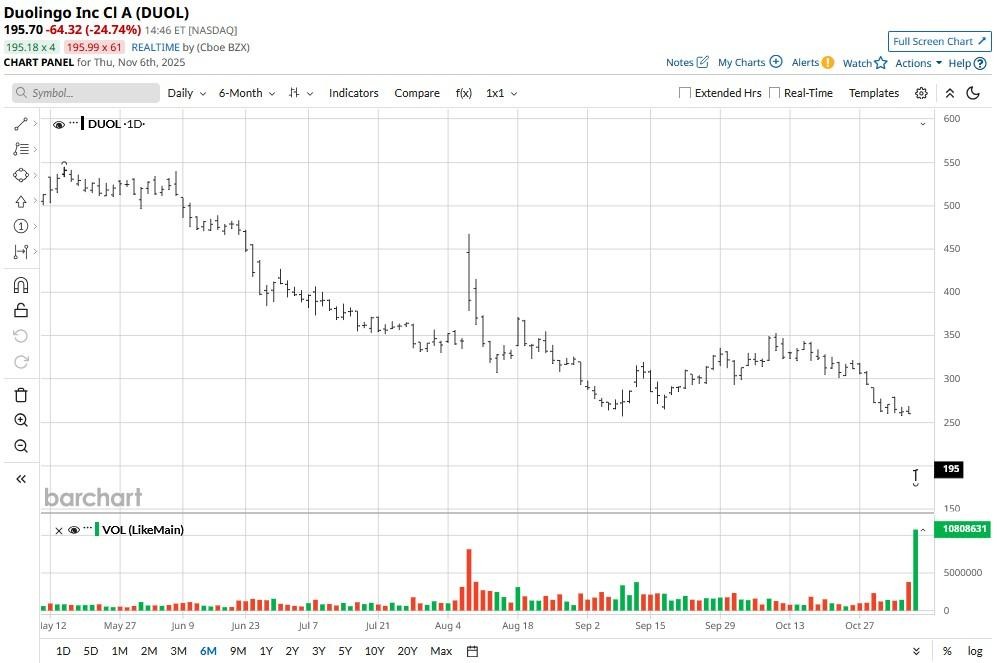
As of late 2023, Duolingo’s stock has shown a mixture of volatility that reflects broader market trends and specific company challenges. After achieving a high of approximately $200 per share shortly after its IPO, the stock price saw fluctuations, trading around $120 as of this October. Factors influencing these changes include changes in user engagement, competition in the ed-tech sector, and the company’s latest earnings reports.
In its most recent earnings call, Duolingo reported a 25% increase in revenue year-over-year, highlighting 50 million monthly active users globally. This growth is attributed to the launch of new features such as Duolingo Max, a subscription offering that uses advanced AI to provide personalized learning experiences. However, ongoing concerns regarding profitability, as the company reported a net loss that was wider than expected, have led some investors to reassess their positions.
Market Trends and Competition
One key aspect impacting Duolingo’s stock is the competitive landscape of the online education sector. Companies such as Rosetta Stone and Babbel have gained popularity, prompting Duolingo to innovate further and enhance user experience continuously. Moreover, macroeconomic factors and shifting investor sentiment in tech stocks can substantially impact Duolingo’s stock price. A downturn in the tech sector or increasing inflation rates could lead to decreased investment in high-growth companies like Duolingo.
Conclusion
The trajectory of Duolingo’s stock stock presents both challenges and opportunities for investors. While the company has made commendable progress in expanding its user base and diversifying its offerings, it faces ongoing scrutiny over its profitability and market competition. As educational technology continues to evolve and demand for online learning remains strong, Duolingo’s future stock performance will heavily depend on its ability to adapt and sustain growth in a competitive landscape. Investors should closely monitor both market trends and Duolingo’s strategic moves as they consider potential investments.