Introduction
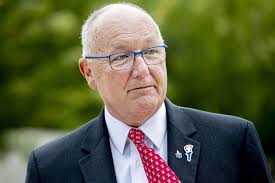
Pete Hoekstra, a prominent figure in U.S. politics, has had a significant influence over the years, serving as a member of the U.S. House of Representatives and as the U.S. Ambassador to the Netherlands. His political journey and legislative contributions have garnered attention, especially in light of recent developments that emphasize the roles of international relations and domestic policies.
Background
Born on October 30, 1953, in Groningen, Netherlands, Pete Hoekstra immigrated to the United States at a young age. He pursued higher education at Hope College, later earning a Master’s degree in business administration from the University of Michigan. Before entering politics, Hoekstra worked in various capacities, including as a businessman and a consultant.
Political Career
Hoekstra’s political career began in 1993 when he was elected to represent Michigan’s 2nd Congressional District in the House of Representatives. He served there until 2011, playing a significant role in various committees, notably on the Intelligent Committee, where he was a staunch advocate for security and defense issues.
During his tenure in Congress, Hoekstra became known for his conservative stances on various issues, including immigration and economic policy. His outspoken nature often polarised opinion among his constituents, but he remained a key player within his party.
Ambassadorship and Recent Developments
In 2017, Hoekstra was appointed as the U.S. Ambassador to the Netherlands, a position that brought him back into the international spotlight. His tenure was marked by controversial remarks and public relations challenges, yet he maintained a focus on strengthening U.S.-Dutch relations amidst global changes.
As of late 2023, Hoekstra continues to engage in discussions surrounding U.S. foreign policy and national security. His insights are considered valuable by many, especially as international relations become increasingly intricate in the post-pandemic world. Moreover, recent local elections have also showcased a resurgence of interest in conservative figures, hinting at potential future political aspirations for Hoekstra.
Conclusion
Pete Hoekstra’s influential career has underscored the complexities of modern governance and diplomacy. As political landscapes shift, his background and experience may become pivotal in shaping future policy discussions. For constituents and followers of U.S. politics alike, understanding Hoekstra’s journey offers significant insights into the interplay between local and international dynamics. As he remains active in political discourse, it will be interesting to observe how his contributions will evolve in the coming years, particularly in a time when global engagement is paramount.