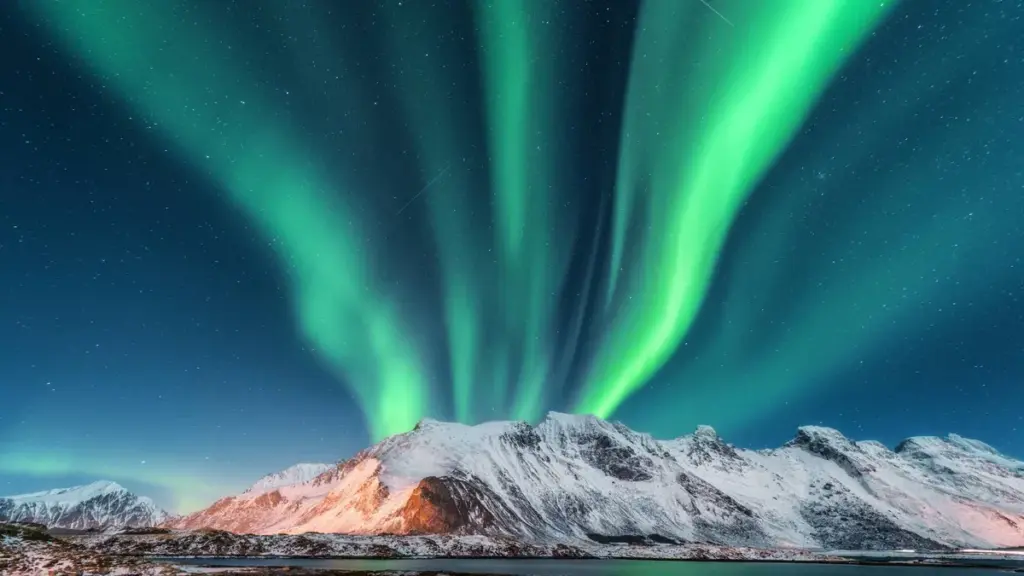
Historically, the aurora borealis, or northern lights, has been a phenomenon primarily observed in northern regions, with expectations often limited to states like Alaska and parts of Canada. However, a significant shift is anticipated as a G2 solar storm approaches, forecasted to allow visibility of the auroras as far south as Illinois and Oregon.
On March 18, starting late at night and continuing into the early morning of March 19, the northern lights are expected to be visible in about 20 states across the U.S. This marks a notable change from previous expectations, where such displays were rarely seen outside of the northernmost states.
The best viewing conditions are projected to occur between 10 p.m. and 2 a.m. local time, with ten states identified as having the highest likelihood of strong aurora displays: Alaska, Washington, Idaho, Montana, North Dakota, South Dakota, Minnesota, Wisconsin, Michigan, and Maine.
The forecasted G2 solar storm, categorized as moderate strength, is expected to enhance the visibility of the auroras, especially as the March 20 spring equinox approaches. This alignment often intensifies solar activity, leading to more vibrant displays.
While the excitement builds, it is important to note that cloudy skies could hinder visibility in certain areas, such as Burlington, Vermont, where up to one inch of snow could affect viewing conditions. Details remain unconfirmed regarding the exact visibility of the northern lights in states like Indiana, Ohio, and Pennsylvania, which will depend on local weather conditions.
Experts from the National Oceanic and Atmospheric Administration and the Space Weather Prediction Center emphasize that auroras occur as a result of the sun’s interaction with the Earth’s atmosphere, creating stunning displays of color in the night sky. The phenomenon is a natural spectacle that draws attention from both casual observers and dedicated skywatchers alike.
As the date approaches, many are preparing for a rare opportunity to witness the aurora borealis in regions where it is not commonly seen. This event highlights the dynamic nature of space weather and its ability to influence atmospheric phenomena on Earth.
For those hoping to catch a glimpse of the northern lights, it is advisable to find dark locations away from light pollution, as this will enhance the viewing experience. The upcoming days promise to be an exciting time for those interested in experiencing this natural wonder.