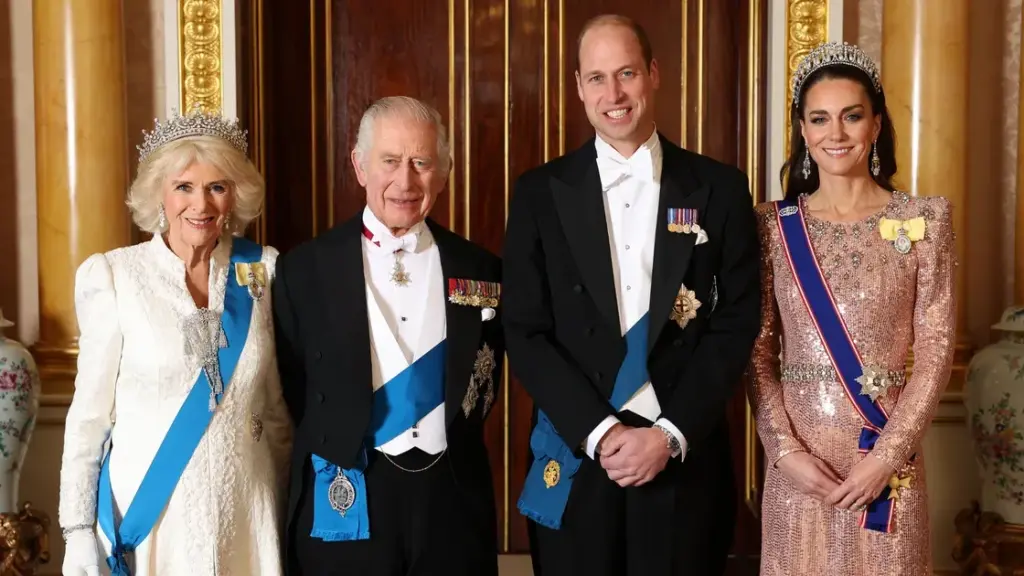
“Remember when our late Queen — who would have been 100 this week — told Harry and Meghan that they couldn’t be ‘half-in, half-out’ members of the Royal Family?” Jane Moore’s words resonate deeply as the British Royal Family gathers to commemorate a significant milestone: the centenary of Queen Elizabeth II’s birth.
On April 21, 2026, Buckingham Palace became a focal point for royal watchers and families alike. The atmosphere was charged with nostalgia and reflection as King Charles III, Queen Camilla, Prince William, and Princess Catherine stood united in their commitment to honoring the legacy of a beloved monarch.
The event was not just a celebration; it was an opportunity to recognize the shared history between the monarchy and the people. A spokesperson from Buckingham Palace stated, “The visit will be an opportunity to recognize the shared history of our two nations; the breadth of the economic, security and cultural relationship that has developed since then; and the deep people-to-people connections which unite communities.” This sentiment echoes through generations.
Queen Elizabeth II’s influence continues to shape the royal family dynamics today. Her steadfast belief in duty has set a high bar for working royals. Princess Anne, often dubbed the hardest working royal, attended an impressive 457 engagements in 2024 alone. This level of dedication exemplifies how her mother’s legacy is carried forward.
Meanwhile, Prince Edward, Duke of Kent—now at age 90—remains active in royal duties. His long tenure as a working royal since his own ascendance in 1955 speaks volumes about commitment to service within this storied family.
But not all members are actively involved anymore. The absence of Prince Harry and Meghan Markle is palpable. Since stepping back from their royal duties in 2020, their ongoing narrative has intrigued and divided public opinion. Jane Moore also remarked on this tension: “Milking their ‘Duke and Duchess’ titles for all their worth, the Montecito grifters have just completed a Down Under ‘royal tour’ by any other name.” Their choices continue to stir conversations about modern monarchy.
As family members gathered for this poignant occasion, it was clear that they were not merely celebrating a birthday but honoring a legacy that has shaped their identities. Each royal present embodied different facets of public service—from King Charles III’s steady leadership to Princess Catherine’s focus on mental health initiatives.
The event concluded with a sense of anticipation for future engagements and continued service to the nation. With each passing year, the British Royal Family finds ways to adapt while holding fast to traditions that connect them deeply with their people. As they look ahead, one thing remains certain: Queen Elizabeth II’s impact will endure far beyond this centennial milestone.