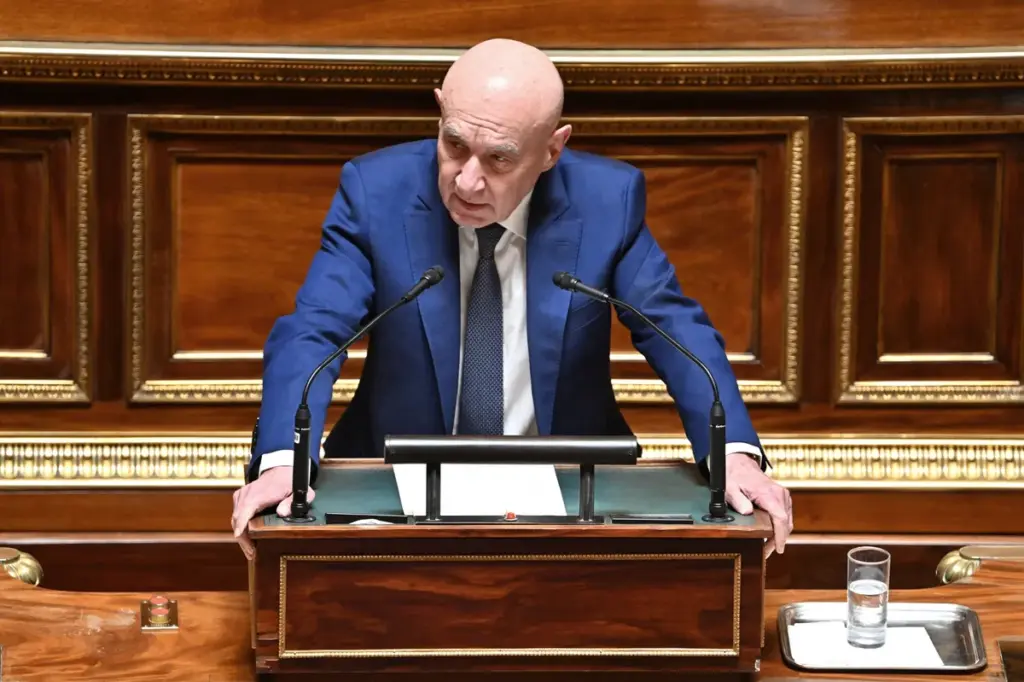
Claude Malhuret, a French senator known for his outspoken views, has recently intensified his critique of Donald Trump’s administration. In a striking comparison, Malhuret previously likened Trump’s presidency to Nero’s Court, but he has since revised his stance, stating, “A year ago, here in France, I compared Trump’s presidency to Nero’s Court. I was wrong. It’s the miracle court.” This shift underscores his growing discontent with the current political climate.
Malhuret’s remarks have painted a vivid picture of the Trump administration, which he describes as a circus rather than a stable government. He stated, “When a clown settles in a palace, he does not become king, it is the palace that becomes a circus.” This metaphor highlights his belief that the administration has devolved into chaos, driven by controversial figures and questionable decisions.
Among his criticisms, Malhuret has pointed to the administration’s handling of various global issues, particularly the Epstein affair, which he claims serves as a distraction from more pressing matters. “Every time the Epstein affair resurfaces, bombs explode somewhere in the world and cause a distraction!” he noted, emphasizing the far-reaching consequences of such controversies.
Furthermore, Malhuret has accused Trump of exploiting his position for personal gain, asserting, “There isn’t a single country where Trump did not take advantage of the situation to enrich himself without ever forgetting his family.” This accusation speaks to the broader concerns regarding ethics and accountability in leadership.
In discussing military interventions, Malhuret expressed alarm over the frequency of strikes during Trump’s presidency, suggesting that it has surpassed those under President Biden. He criticized the lack of a clear strategy in these military actions, raising questions about their effectiveness and the potential repercussions for affected populations, particularly in Iran.
Malhuret’s critique extends beyond Trump, as he warns against the rise of political extremes in France. He calls for a strategic awakening in Europe regarding security and decision-making, urging leaders to prioritize thoughtful governance over populist rhetoric.
His comments resonate with many observers who are concerned about the implications of U.S. foreign policy on global stability. As Malhuret articulates these issues, he uses a Turkish proverb to illustrate the need for a more grounded approach to leadership.
As the political landscape continues to evolve, the reactions to Malhuret’s statements highlight a growing discourse on the effectiveness of current administrations. While some support his views, others remain skeptical of the impact such critiques can have on international relations.
Details remain unconfirmed regarding the potential responses from Trump’s camp or other political figures in light of Malhuret’s remarks. However, it is clear that the conversation surrounding leadership and accountability is far from over.