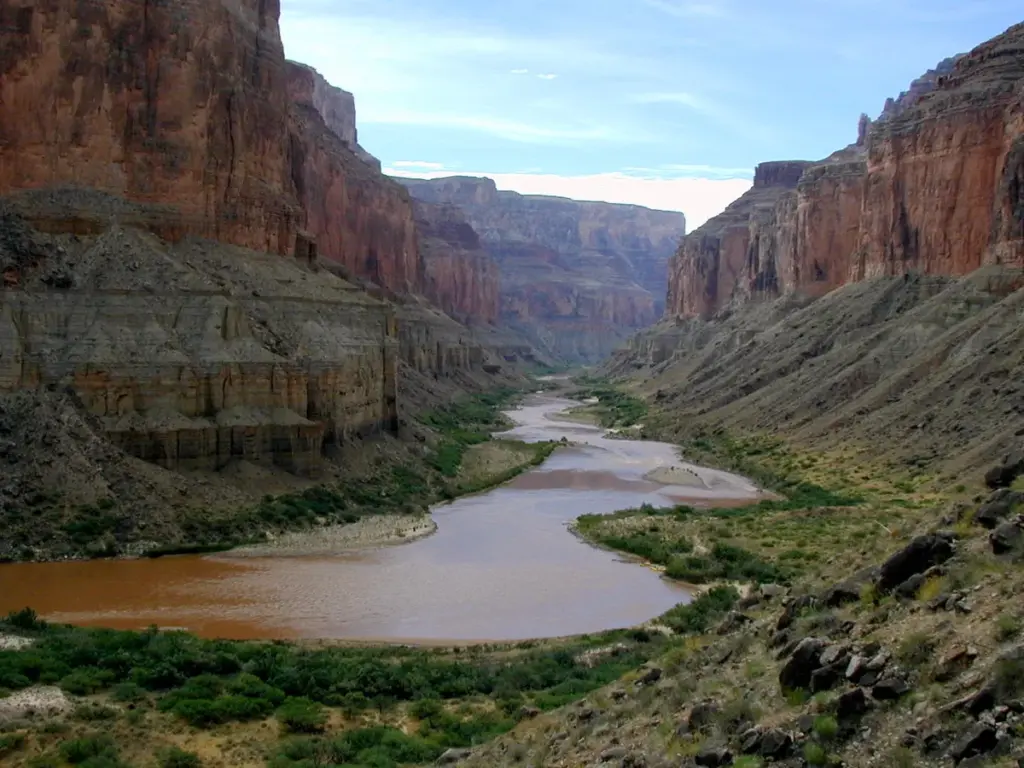
The Colorado River, a vital resource supplying water to seven U.S. states and Mexico, is facing significant challenges due to climate change. This ongoing crisis affects not only drinking water and farming but also hydropower generation, which many communities rely on.
Since the year 2000, forecasts based on snowpack have consistently overestimated river flow, leading to a troubling discrepancy. Warmer and drier spring conditions account for nearly 70% of the difference between predicted and actual river flows. As precipitation across the Colorado River Basin has declined by about 7% since 1999, the implications for local ecosystems and water management strategies are profound.
Less spring rainfall means that plants are increasingly dependent on melting snow for water, which in turn reduces streamflow. In some years, only about half of the expected snowmelt reaches rivers and streams, exacerbating the water scarcity issue.
Rising temperatures are accelerating snowmelt and increasing water loss through evaporation and plant use. The Millennium drought, which began around the year 2000, continues to challenge the region, raising concerns about the long-term sustainability of the Colorado River.
The Colorado River Compact, drafted in 1922, was intended to protect water rights amid competing interests, but the changing climate presents new challenges that the original framework did not anticipate. As Daniel Hogan noted, “We wanted to focus on the cascading consequences of this,” highlighting the interconnected nature of these environmental changes.
In a related effort, Colorado Parks and Wildlife has been working to restore river otter populations, reintroducing 120 otters to the state from 1976 to 1991. Bob Inman stated, “This year’s survey will help us understand the extent of reintroduction success and any limitations to it,” emphasizing the importance of monitoring wildlife in the face of environmental changes.
As we look to the future, the answer to the Colorado River’s missing water mystery is not a single cause but a chain reaction driven by a changing climate. The problem with conducting calculations in April, as pointed out by Lundquist, is that spring has not yet fully unfolded, making predictions even more complex.
Details remain unconfirmed regarding the long-term impacts of these changes, but the community must remain vigilant and adaptive as we navigate this critical period for the Colorado River and its surrounding ecosystems.