For Belgium’s Beltway fans, a rout was the best revenge - Politico
Dozens of European Parliament lawmakers are seeking an investigation into FIFA president Gianni Infantino. The inquiry would focus on his involvement in the decision to allow U.S. striker Folarin Balogun to play in a World Cup match despite having received a red card in a previous game. This move follows public intervention by U.S. President Donald Trump.
Balogun was shown a red card during the U.S. victory against Bosnia-Herzegovina on July 1. Typically, this would result in ineligibility for the subsequent match. However, FIFA lifted his suspension for a match on Monday after President Trump reportedly intervened with Infantino on behalf of the striker.
Lawmakers Barry Andrews, Lara Wolters, and Niels Fuglsang issued a joint statement, calling FIFA‘s decision to “change the rule on red card suspensions midtournament is a disgrace and a perversion of justice.” They further stated that Infantino and FIFA had once again “surrender[ed] to the demands of the Trump administration.”
The lawmakers are urging national football associations within EU countries to prompt the FIFA Ethics Committee to investigate Infantino. They aim to determine if pressure from the Trump administration influenced the lifting of the suspension, as well as to examine “other potential breaches of political neutrality,” such as the awarding of the FIFA Peace Prize to Trump.
FIFA has maintained that the decision to lift the suspension was made by a disciplinary committee. The lawmakers reported that 35 colleagues have signed a letter supporting the investigation.
They emphasized that the essence of sport lies in impartial and transparent rules. They believe that when Infantino permits political pressure to dictate who plays, this fundamental sense of fairness is compromised.
Controversy and precedent
The decision to overturn Balogun‘s one-game suspension has drawn significant criticism. This action, following President Trump‘s public intervention, has brought renewed scrutiny to soccer’s governing body. What might have been a straightforward sports story has instead become another instance in FIFA‘s history of controversial decisions and allegations of political influence.
The incident began when Folarin Balogun received a red card for an aggressive foul during the match against Bosnia and Herzegovina. While opinions on the referee’s initial decision may vary, the subsequent reversal by FIFA‘s disciplinary committee has raised concerns among soccer fans. This unprecedented step cleared Balogun to participate in the United States‘ knockout-stage match against Belgium.
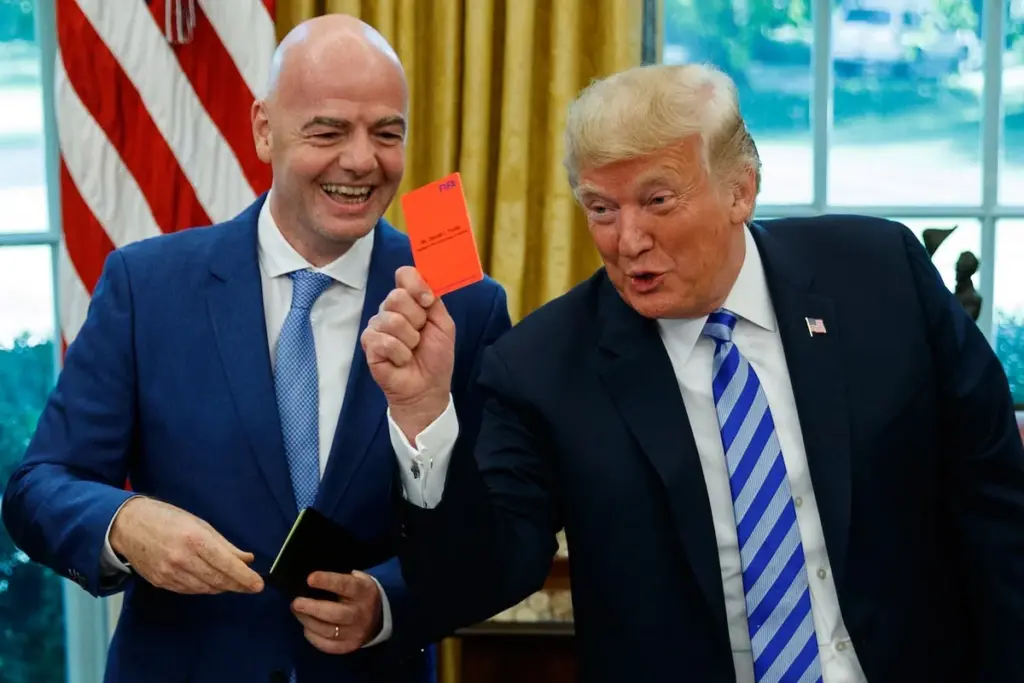
From the Oval Office, President Trump reportedly politicized the incident, publicly criticizing the referee. He also stated that if the U.S. team were to lose without its full squad, he would consider it “rigged.”
Despite the controversy, Belgium defeated the United States 4–1, ending the host nation’s progression in the tournament. This outcome occurred even with Balogun‘s participation.
The Union of European Football Associations (UEFA), a prominent football governing body, has strongly condemned FIFA‘s decision. UEFA declared that FIFA had “crossed a red line” by interfering with a disciplinary decision that should have adhered to established rules. They described FIFA‘s move as “unprecedented, incomprehensible and unjustifiable,” warning that it could undermine the integrity of the tournament by encouraging similar demands in future disciplinary cases.
The reversal of an automatic red-card suspension is seen by some as setting a dangerous precedent. In a World Cup already marked by inconsistent refereeing, the selective application of the video assistant referee (VAR), and perceived favouritism, every disputed decision could now invite accusations of political interference. Critics argue that FIFA‘s action has not merely overturned a suspension but has also eroded confidence in the integrity of the tournament itself.
Political connections and past controversies
The relationship between President Trump and FIFA President Gianni Infantino is central to understanding the political influence observed in this World Cup. Infantino and Trump have cultivated a close bond, with Infantino reportedly referring to Trump as his “football friend.” This relationship was strengthened through preparations for the 2026 World Cup, which is being hosted by the United States, Canada, and Mexico.
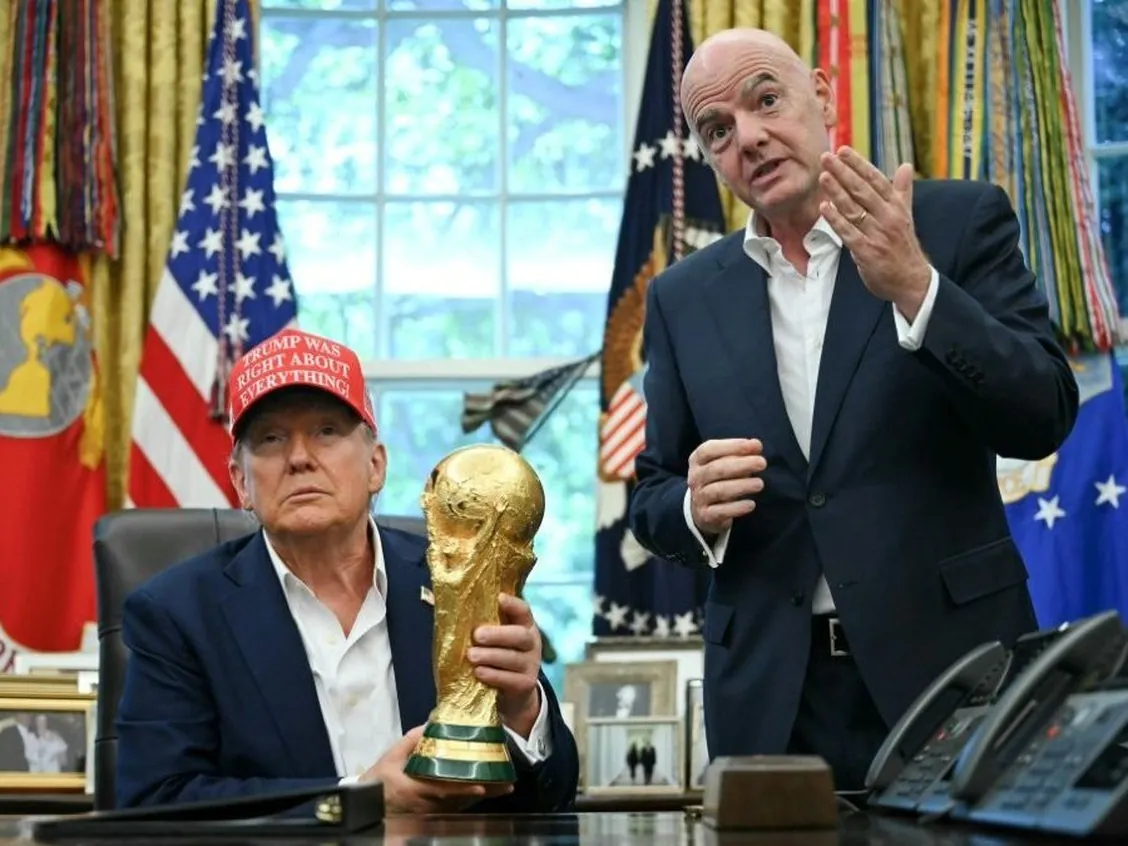
In December 2025, Infantino awarded Trump the inaugural FIFA Peace Prize – Football Unites the World. This award included a gold-plated trophy, a certificate, and a commemorative medal. The decision faced widespread criticism, particularly as it was reportedly announced without prior approval from FIFA‘s board. This led to speculation that it might have been a “consolation prize” after Trump did not receive the Nobel Peace Prize.
This incident also brings to mind past controversies involving FIFA, such as the awarding of the 2022 FIFA World Cup to Qatar. That decision led to global investigations and exposed systemic issues, including allegations of bribes and corruption among FIFA executive committee members. While that controversy occurred under former FIFA President Sepp Blatter, who later admitted it was a “bad choice,” questions about FIFA‘s transparency persist.
Infantino has also faced scrutiny regarding his use of a private jet operated by a Qatar Airways executive during the 2026 World Cup. Critics have pointed to the significant air miles travelled and the carbon footprint, which appears to conflict with FIFA‘s stated sustainability commitments. As the 2026 World Cup progresses into the quarter-finals, the question remains whether the tournament will be decided purely on the field or if political influences will continue to cast a shadow over the sport.
The France–Paraguay Round of 16 match also raised concerns about inconsistent refereeing. Uzbek referee Ilgiz Tantashev was criticized for his handling of Paraguay‘s tactics against Kylian Mbappé and France. Despite Paraguay committing 13 fouls, no Paraguayan player received a yellow card, while France received three. This disparity fueled perceptions of inconsistent officiating standards within FIFA.
Source: theglobeandmail.com