Introduction
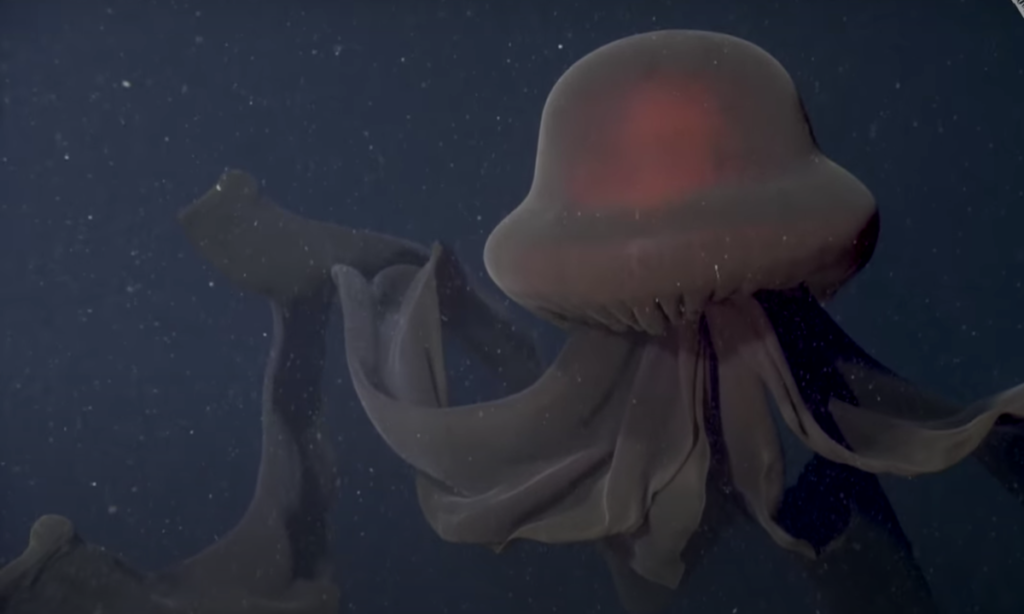
The giant phantom jellyfish (Stygiomedusa gigantea) is one of the most intriguing yet elusive marine creatures in our oceans. Growing up to 1.5 meters in diameter, its translucent body and delicate, trailing tentacles capture both fascination and concern as scientists strive to understand this deep-sea inhabitant. Given its rarity and the limited knowledge surrounding its behaviour, the giant phantom jellyfish represents the mysteries that still reside in our oceans, highlighting the importance of marine conservation and research.
Recent Sightings and Research
In recent months, the giant phantom jellyfish has made headlines due to several unexpected sightings in coastal waters. A recent encounter off the coast of British Columbia shocked researchers when divers spotted a school of these jellyfish swaying gracefully in the currents. These sightings have spurred renewed interest in studying the species, particularly its role in the marine ecosystem, its dietary habits, and how climate change may be affecting its population.
Marine biologists have been tracking giant phantom jellyfish as they are known to inhabit both the depths and the surface, making their behaviour difficult to monitor. Unlike many jellyfish, these creatures are believed to consume small fish and plankton by utilizing their long, trailing tentacles to ensnare prey. Recent research suggests that as the ocean temperature rises, these jellyfish could see a shift in their habitat, which may influence their interactions with other marine species.
Importance of Jellyfish in Ecosystems
Jellyfish, including the giant phantom jellyfish, play a crucial role in the marine food web. As both predator and prey, they help maintain the balance within the ecosystem. While they feed on small fish and zooplankton, many larger marine animals, such as sea turtles and some fish species, rely on jellyfish as a food source. The health and dynamics of ocean ecosystems can be significantly affected by jellyfish populations.
Conclusion
The giant phantom jellyfish serves as a reminder of the vast wonders still waiting to be discovered in our oceans. As sightings become more frequent, it is vital for scientists to continue monitoring this elusive species, assessing its impact on marine ecosystems, and understanding how environmental changes may affect its survival. For nature enthusiasts and conservationists alike, the continued study of species like the giant phantom jellyfish underscores the importance of preserving our oceans and the myriad life forms they support.