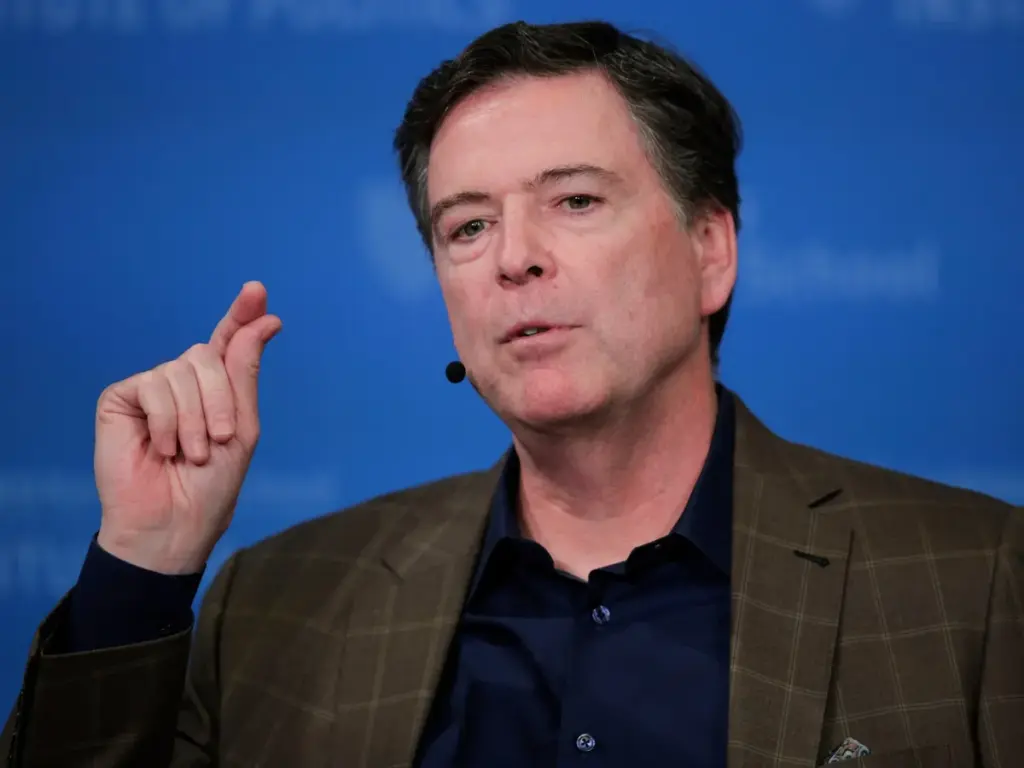
On April 29, 2026, former FBI Director James Comey turned himself in after being indicted for allegedly threatening the life of President Donald Trump through a social media post. This marks Comey’s second indictment secured by the Trump Department of Justice.
The events leading up to this moment began when Comey posted a photo on Instagram featuring seashells arranged to spell out “8647.” The number 47 refers to Trump, the 47th president of the United States. Acting Attorney General Todd Blanche stated, “Threatening the life of the president of the United States will never be tolerated by the Department of Justice.” Each charge against Comey carries a maximum penalty of five years in prison, totaling up to ten years if convicted on both counts.
Comey has vehemently denied the allegations. He remarked, “I’m still innocent, I’m still not afraid, and I still believe in the independent federal judiciary, so let’s go.” His defense indicates he plans to fight these charges vigorously.
This situation unfolds against a backdrop where the FBI is actively seeking recruits from diverse backgrounds and skill sets. Special Agent Michelle, a senior team leader for the evidence response team, expressed her motivation: “I wanted at the end of the day to feel like I was helping people.” Meanwhile, Special Agent Brett focuses on cyber crime investigations related to ransomware—a critical area for law enforcement today.
The FBI Academy recently graduated Brett in May 2024. With 18 years in his career before joining the FBI, he reflects that he sought excitement and challenges in his new role. The agency’s recruitment efforts are vital as they aim to bolster their ranks with individuals ready to tackle emerging threats.
As this legal drama plays out, it raises questions about political speech and accountability. The implications extend beyond Comey; they touch on how public figures communicate and how law enforcement responds to perceived threats. Robert Bohls, special agent in charge of FBI Salt Lake City, emphasized that such incidents could impact public trust in federal agencies.
The unfolding story highlights tensions between political figures and law enforcement agencies like the FBI. As many watch closely, what’s clear is that this indictment is more than just a legal issue; it’s a reflection of our current political climate and its complexities.