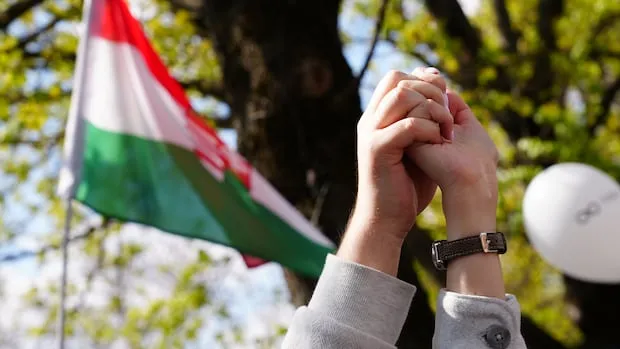
Viktor Orbán has been in power for 16 years, and his government has been characterized by a push towards an illiberal democracy. As Hungarians head to the polls for a parliamentary election, the stakes are higher than ever, with the potential to end Orbán’s long-standing reign as Prime Minister.
Opinion polls indicate that Orbán’s Fidesz party may face a significant challenge from the opposition Tisza Party, led by Péter Magyar. This election is particularly critical as it could reshape Hungary’s political landscape and its relationship with the European Union, which has frozen billions of euros in funds due to concerns over Hungary’s democratic backsliding.
Local and international monitors, including the OSCE, are observing the election, which has been marred by accusations of gerrymandering favoring the ruling government. Gergely Lázár, a concerned voter, expressed his anxiety, stating, “I’m really scared … to be honest.” This sentiment reflects a broader unease among the electorate as they navigate this pivotal moment.
As the election unfolds, Péter Magyar emphasized the historical significance of the event, saying, “Hungarian history is being written here on streets and squares.” His words resonate with many who feel that the outcome of this election could define the future of democracy in Hungary.
Despite the challenges, voters will elect 199 members of parliament, indirectly determining the next Prime Minister. Observers are keenly watching how the results will impact not only Hungary’s internal politics but also its standing within the European Union, especially in light of the ongoing conflict in Ukraine and the EU’s financial support.
Roland Kósa, a member of the opposition, shared his frustrations, noting, “When we got elected, what we faced even before and after is that Fidesz basically looked through us and said and thought we do not exist – this is still their city, this is still their country.” This statement underscores the deep divisions within Hungarian society.
As the votes are cast and counted, the nation holds its breath, awaiting the results that could either reinforce Orbán’s grip on power or usher in a new era of governance. Observers predict that the aftermath of this election will be closely scrutinized, with implications for Hungary’s future direction.