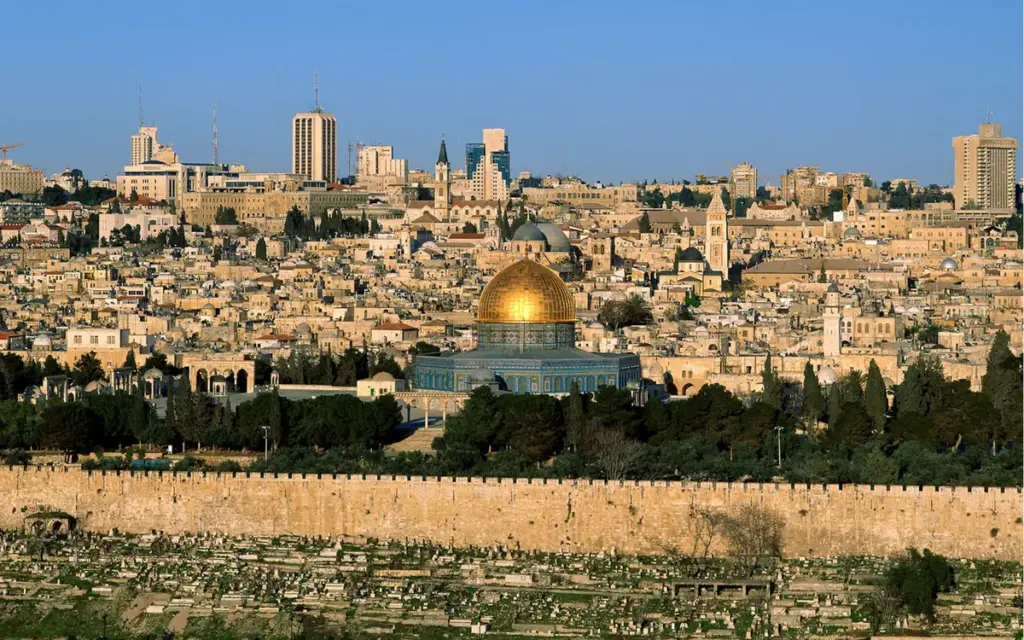
In a troubling escalation of tensions, Israeli security forces attacked and arrested Palestinian Christians attempting to reach the Church of the Holy Sepulchre on Holy Saturday. This incident is part of a broader pattern of restrictions that have intensified in recent weeks, particularly as the Orthodox Easter coincides with significant religious observances.
On Orthodox Easter, Israeli National Security Minister Itamar Ben-Gvir and his supporters stormed into the Al-Aqsa Mosque compound, further inflaming the situation. This follows a 40-day closure of both the Al-Aqsa Mosque and the Church of the Holy Sepulchre during the recent US-Israeli war on Iran, raising concerns about the ongoing restrictions on religious practices.
The Status Quo agreement, which has regulated religious life in Jerusalem since the 16th century, is increasingly under strain. Recognized in the Treaty of Paris (1856) and the Berlin Treaty (1878), this agreement is seen as a crucial safeguard against complete Israeli control over all aspects of life in the city.
Amid these tensions, Israeli authorities have also forced two Palestinians in Jabal al-Mukabber to self-demolish their home, citing a lack of building permits. This practice of pressuring Palestinians to demolish their homes has become a common tactic, with families facing the threat of bulldozers and steep charges if they refuse.
As the situation continues to evolve, observers note that Israeli policies are restricting Palestinian urban growth in occupied Jerusalem while simultaneously expanding Israeli settlements. Sheikh Mohammad al-Abassi, the imam of Al-Aqsa Mosque, was detained by Israeli forces and barred from entering the compound for a week, highlighting the ongoing challenges faced by religious leaders in the area.
“Prayer has become an act of resistance,” remarked a local leader, reflecting the resilience of the community amid these challenges. The impact of these events is felt deeply, especially as the Jewish community prepares to remember the 6 million Jews murdered during the Holocaust on the 27th of the Hebrew month of Nissan, a day that underscores the importance of remembrance and resilience.
As tensions remain high, many are left wondering how these developments will affect the fragile balance of religious coexistence in Jerusalem. Details remain unconfirmed regarding the long-term implications of these actions on the community’s ability to freely practice their faith.