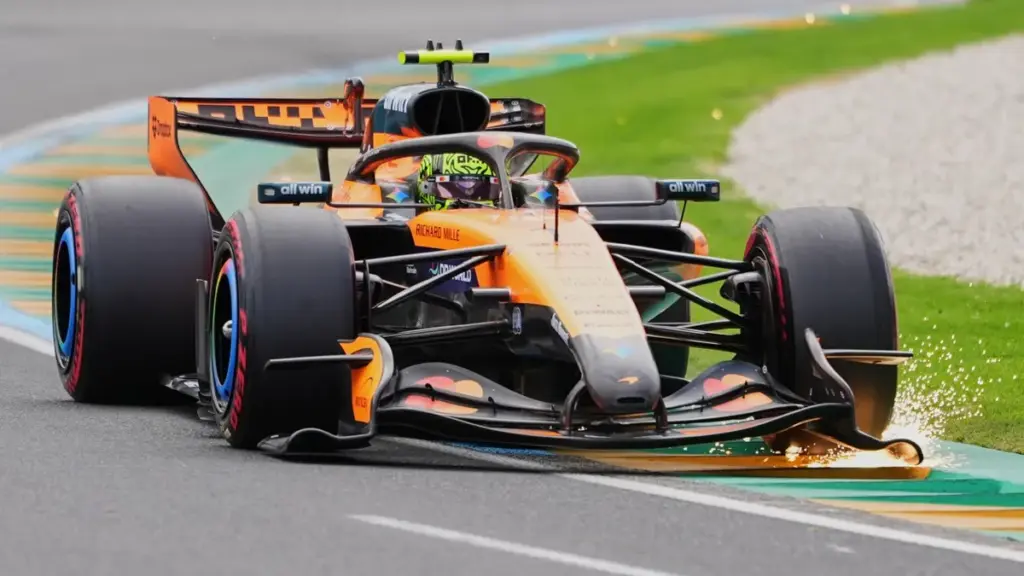
Lando Norris shines at Australian Grand Prix
In a notable performance at the Australian Grand Prix, Lando Norris qualified sixth and ultimately finished fifth in the race held in Melbourne, Australia. The event showcased not only Norris’s driving skills but also his candid reflections on the current state of Formula 1.
Following the race, Norris expressed his dissatisfaction with the new regulations, stating, “We’ve come from the best cars ever made in Formula 1, and the nicest to drive, to probably the worst.” His comments highlight a growing concern among drivers regarding the impact of recent changes in the sport.
The 2026 regulations introduced a significant shift in F1 car design, mandating a 50:50 power split between the turbo engine and electrical energy. This change has increased the complexity of energy management in the vehicles, which Norris criticized as “very artificial.” He noted that the new setup has made driving more chaotic, raising safety concerns: “It’s chaos, you’re going to have a big accident, which is a shame.”
During the practice sessions leading up to the race, Norris faced reliability issues that added to his challenges. Additionally, he collided with a cooling fan during qualifying, which further complicated his preparations for the race. Despite these setbacks, he managed to secure a respectable finishing position.
Norris’s performance in Melbourne reflects a broader trend in Formula 1, where drivers are grappling with the implications of evolving regulations. The introduction of hybrid engines powered equally by sustainable fuels and electric power aims to enhance the sport’s sustainability, yet it has also sparked debate over the driving experience and safety.
As the season progresses, Norris’s insights may resonate with other drivers and teams facing similar challenges. The complexities introduced by the new regulations could lead to further discussions on how to balance performance, safety, and sustainability in Formula 1.
Reactions from fans and analysts have been mixed, with many echoing Norris’s sentiments about the current state of the sport. As the debate continues, it remains to be seen how teams will adapt to these changes and what impact they will have on future races.