“We’re offering a very fair and reasonable DEAL, and I hope they take it because, if they don’t, the United States is going to knock out every single Power Plant, and every single Bridge, in Iran. NO MORE MR. NICE GUY,” declared Donald Trump during a press conference in New York City. The weight of his words reverberates through the corridors of power, especially as tensions escalate in the Middle East.
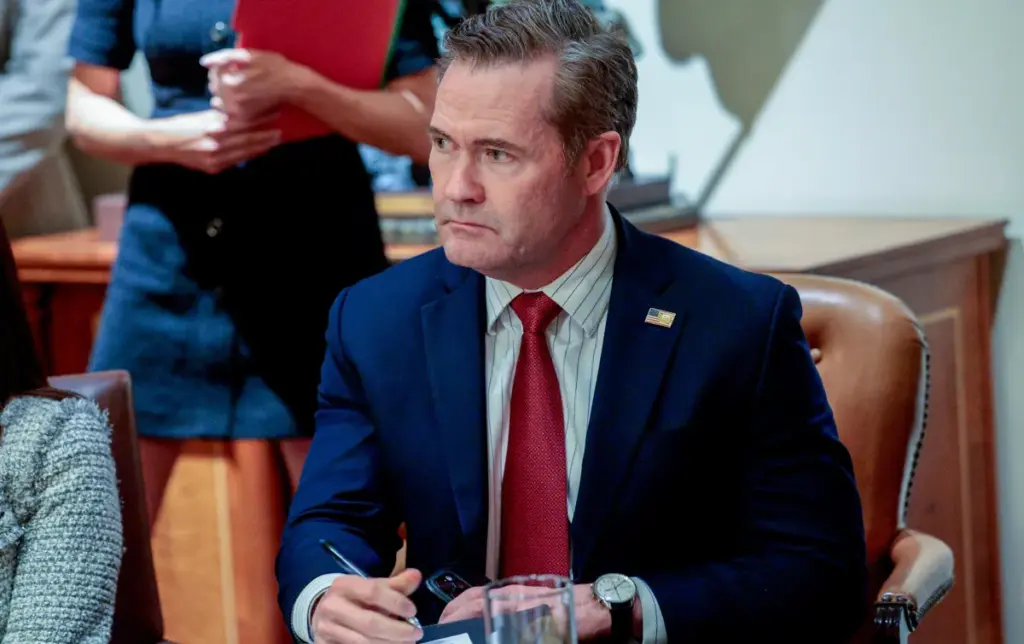
Michael Waltz, the U.S. Ambassador to the United Nations, stood firmly behind Trump’s aggressive stance. “That would be an escalatory ladder. And if you go back in the history of warfare—go all the way back to World War II—we bombed and took down bridges and other infrastructure that could be used for civilian purposes but also for military production,” he stated. This perspective is crucial as it sheds light on the current geopolitical landscape.
The backdrop to these remarks is significant. A ceasefire in Lebanon was implemented just days earlier on April 14, 2026, following high-level negotiations involving the U.S., Israel, and Lebanon. This fragile peace came amid ongoing concerns about Hezbollah’s influence in the region and its ties to Iran—a relationship that has long troubled U.S. officials.
Waltz’s comments reflect a broader military strategy that prioritizes dismantling enemy capabilities even at the cost of civilian infrastructure. He argued that Iranian air defenses have been decimated, making military strikes more feasible. “We could take that infrastructure out relatively easily,” he asserted confidently.
Moreover, he pointed out a troubling tactic employed by Iran: “The Iranian regime in particular—and its terrorist proxies—have a long history of actually deliberately hiding military infrastructure in hospitals, schools, neighborhoods and other civilian assets.” This claim underscores the complexity of modern warfare where distinguishing between combatants and civilians becomes increasingly difficult.
The stakes are high not just for Iran but for Lebanon as well. Israeli Defense Minister Israel Katz has issued stern warnings regarding Hezbollah’s disarmament—threatening heavy consequences if action isn’t taken soon. The ceasefire might be tenuous; pressure from Iranian interests could shift dynamics rapidly.
As discussions continue at international levels regarding military responses to Iranian threats, Waltz remains steadfast in his belief that all options must remain on the table. His comments spark debate about ethics in warfare and international law—particularly concerning attacks on civilian infrastructure.
For now, the world watches closely as these developments unfold. Details remain unconfirmed regarding future actions or negotiations that may arise from this precarious situation.