The wider picture
The Artemis program aims to return humans to the moon and establish a long-term presence there as a stepping stone toward future missions to Mars. This ambitious initiative is not only a testament to human ingenuity but also a commitment to exploring the unknown and expanding our horizons beyond Earth. With the Artemis 2 mission, NASA is preparing to take a significant leap forward in this journey.
Scheduled for liftoff on April 1, 2026, at 6:24 p.m. EDT from Kennedy Space Center in Florida, Artemis 2 will be the first crewed flight around the moon in over 50 years. This mission will send four astronauts on a roughly 10-day journey, marking a historic moment in space exploration. The astronauts selected for this mission are Reid Wiseman, Victor Glover, Christina Koch, and Jeremy Hansen, each bringing unique backgrounds and experiences to this groundbreaking endeavor.
Christina Koch will make history as the first woman to travel to the moon’s vicinity, while Victor Glover will be the first person of color to do so. Jeremy Hansen will also be making history as the first non-American astronaut to venture into this lunar mission. These milestones highlight the diversity and inclusivity that NASA is fostering in its space exploration efforts.
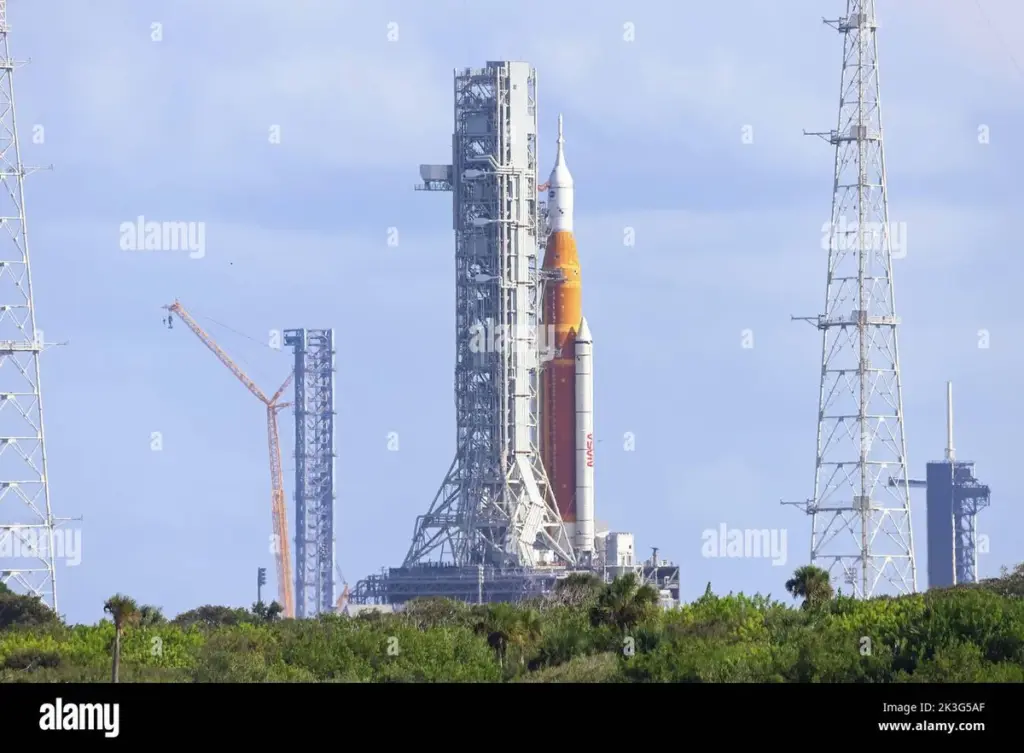
The Artemis 2 mission will utilize NASA’s Space Launch System (SLS) rocket, which stands at an impressive 322 feet tall and generates a staggering 8.8 million pounds of thrust. This powerful rocket is classified as a super-heavy lift launch vehicle, designed to carry astronauts and cargo beyond low Earth orbit. The SLS is NASA’s most powerful rocket, making it a crucial component of the Artemis program.
As the launch window opens from April 1 to April 6, 2026, excitement is building within the space community and among the general public. The Artemis 2 mission will be the first crewed flight of the SLS, testing the systems that will ultimately return astronauts to the Moon for an enduring presence. This mission is not just about reaching the moon; it is about paving the way for human exploration of Mars and beyond.
NASA officials have expressed their enthusiasm for the upcoming mission, emphasizing its significance in the broader context of human space exploration. “Launching the Artemis II Moon rocket will lift off the agency’s first crewed mission under the Artemis program, testing the systems that will return astronauts to the Moon for an enduring presence,” an official stated. This mission is seen as a critical step towards establishing a sustainable human presence on the lunar surface.
Looking ahead, the first Artemis crewed lunar landing is planned for 2028 on the Artemis 4 mission. As we approach the launch date for Artemis 2, the anticipation grows not just for the mission itself but for the future it represents. The Artemis program is set to redefine humanity’s relationship with space, inspiring generations to come.
As the countdown to liftoff continues, the world watches with bated breath. The Artemis 2 mission symbolizes hope, progress, and the unyielding human spirit to explore the cosmos. Details remain unconfirmed, but the excitement surrounding this historic launch is palpable, as communities rally to support this monumental step in space exploration.