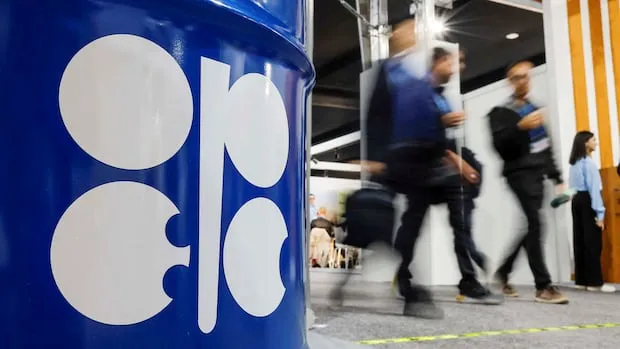
The United Arab Emirates has announced its withdrawal from OPEC and OPEC+ effective May 1, 2026. This decision marks a pivotal shift in the global oil landscape, with implications for oil prices and regional politics.
Since joining OPEC in 1967, the UAE has played a significant role in the organization. However, increasing global energy demands and a focus on national interests have driven this decision. Suhail Mohamed al-Mazrouei, the UAE’s Minister of Energy, stated, “This is a policy decision; it has been done after a careful look at current and future policies related to level of production.”
Before its exit, the UAE contributed approximately 12% of OPEC’s total output, with a production capacity of around 4.8 million barrels per day. The country aims to boost this capacity to 5 million barrels per day by 2027. In contrast, OPEC currently controls about 30% of global oil supply and has been facing challenges to maintain its influence amidst changing dynamics.
The UAE’s departure could ignite a price war among Gulf producers following the recent conflicts in the region. Analysts worry that this move not only erodes OPEC’s market share but may also encourage other members to reconsider their output limitations. The departure of such a key member is seen as a significant blow to an already fraying alliance.
Key facts:
- The UAE has been an OPEC member for 65 years since its establishment in 1960.
- OPEC+ currently accounts for about 40% of the world’s oil output.
- Prior conflicts have left approximately 13% of global supplies trapped due to the closure of the Strait of Hormuz.
The geopolitical landscape is shifting as tensions between the UAE and Saudi Arabia have become increasingly pronounced over various political and economic issues. The UAE’s exit is viewed as part of this broader trend where other nations have also chosen to distance themselves from OPEC, including Qatar and Ecuador.
This transition could reshape energy policies not just within the Gulf Cooperation Council but also on a global scale. With U.S. President Donald Trump previously accusing OPEC of inflating oil prices, some see this as a potential win for his administration as well.