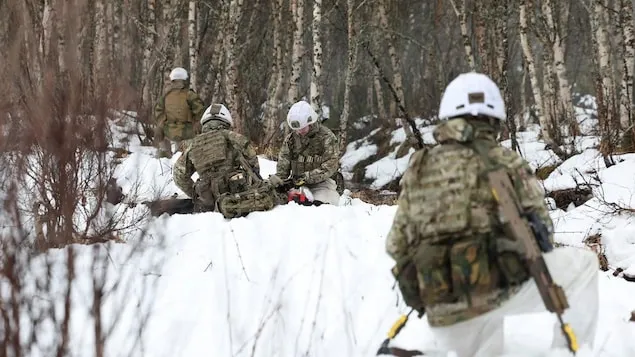
NATO Cold Response Training Exercise
On March 9 to 19, 2023, NATO’s Cold Response training exercise is taking place in Norway, featuring approximately 25,000 soldiers from 14 nations. This significant military collaboration aims to enhance Arctic security and test Norway’s ability to be reinforced in a crisis.
Mark Carney, the Canadian Prime Minister, is set to observe the exercise, marking the first visit by a Canadian prime minister to Norway since 1980. His presence underscores the importance of this event in the context of international military cooperation and security in the Arctic region.
The Cold Response exercise is part of the Arctic Sentry initiative, which focuses on improving coordination among Arctic nations. The exercise has been a longstanding event, evolving to address the complexities of modern military operations in challenging environments.
During his visit, Carney is expected to meet with leaders from Denmark, Sweden, Finland, and Iceland, further solidifying ties among northern European countries. Discussions will also extend to the U.S. war with Iran and the ongoing oil crisis during his subsequent meetings in the United Kingdom.
Senior government officials have highlighted the challenging conditions of the terrain, describing it as “very difficult” and “inhuman” due to the cold and geographic factors. This environment poses unique challenges for military operations, making the Cold Response exercise a critical test of capabilities.
Michael Byers, a political analyst, noted that the gathering of Nordic countries alongside Canada sends a strong message to U.S. President Donald Trump regarding Arctic security. The collaboration among these nations demonstrates a unified approach to safeguarding the region.
As the exercise unfolds, officials emphasize the importance of understanding the military capacities needed for future crises and conflicts. This training is not only about current readiness but also about preparing for potential challenges that may arise in the Arctic and beyond.
Details remain unconfirmed regarding specific outcomes of the exercise, but the participation of 25,000 soldiers from 14 nations signifies a robust commitment to collective security in the Arctic region.