Introduction
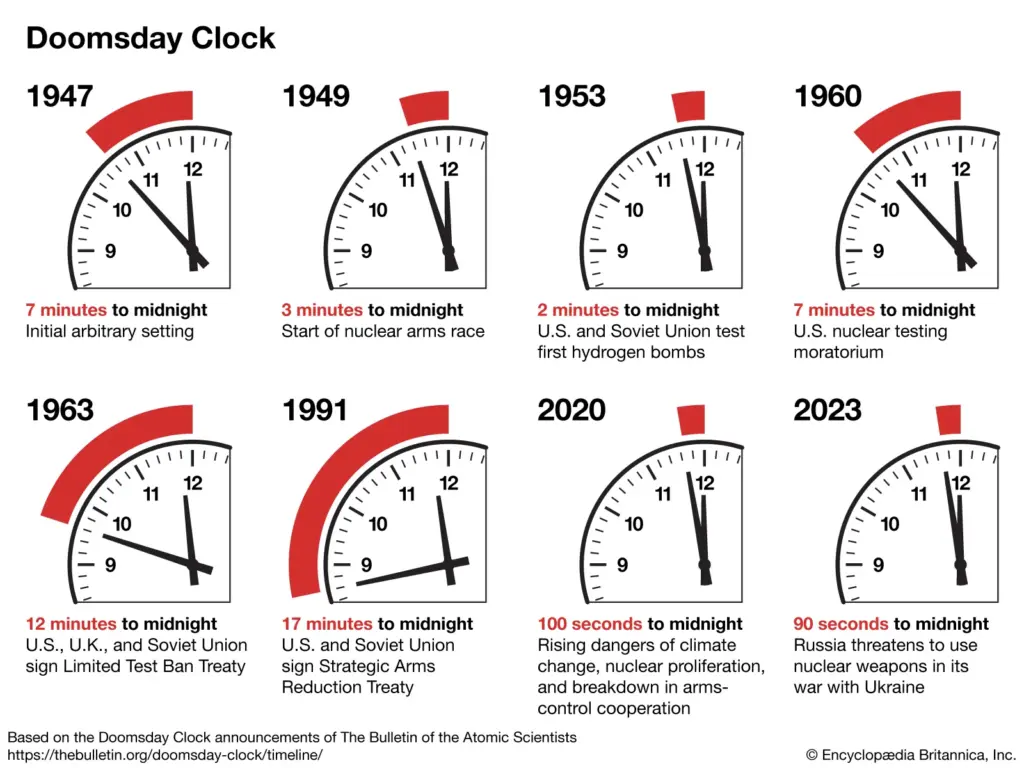
The Doomsday Clock is a symbolic representation created by the Bulletin of the Atomic Scientists in 1947 to convey the urgency of global security threats. The clock indicates how close humanity is to catastrophic disaster, either from nuclear risks or existential dangers posed by climate change, pandemics, and other technological advancements. In 2023, the clock is set at 100 seconds to midnight—the closest it has ever been—highlighting the pressing nature of these global issues.
Current Events and Threats
In recent years, geopolitical tensions, notably the conflict involving Russia’s invasion of Ukraine, have intensified concerns over nuclear proliferation. The potential for miscalculation in such an explosive environment has led to heightened fears of nuclear engagements. Additionally, climate change has accelerated at an unprecedented rate, with record high temperatures, catastrophic wildfires, and severe weather events impacting millions. The science surrounding climate change has reached a tipping point, with the Intergovernmental Panel on Climate Change (IPCC) warning that failure to act could lead to irreversible environmental damage.
The COVID-19 pandemic revealed vulnerabilities in global health systems and highlighted the potential for future zoonotic diseases. With over 6 million lives lost globally, the pandemic underscored the interconnectedness of global health and security. If the lessons from the pandemic are not properly integrated into future policies, we risk facing more significant threats in the future.
Conclusion
The Doomsday Clock serves as a stern reminder that humanity stands at a critical juncture. While the scientific community and global leaders are engaging more earnestly with these threats, the time for action is limited. The clock is not just a metaphor; it acts as a rallying cry for all of us to prioritize environmental stewardship, diplomatic resolution of conflicts, and the strengthening of international health systems. The decisions made today will directly influence the safety of future generations. Therefore, it is crucial for citizens and policymakers to work collaboratively to reduce the risks associated with existential threats and push the hands of the Doomsday Clock away from midnight.