Introduction
The Windsor Battery Plant is emerging as a crucial player in Canada’s shift towards electric vehicle (EV) production. As the demand for sustainable transportation grows, this facility aims to bolster Canada’s position in the global EV market. With governments and consumers prioritizing eco-friendly alternatives, the establishment of the Windsor Battery Plant holds significant implications for the automotive and green energy sectors.
Details on the Windsor Battery Plant
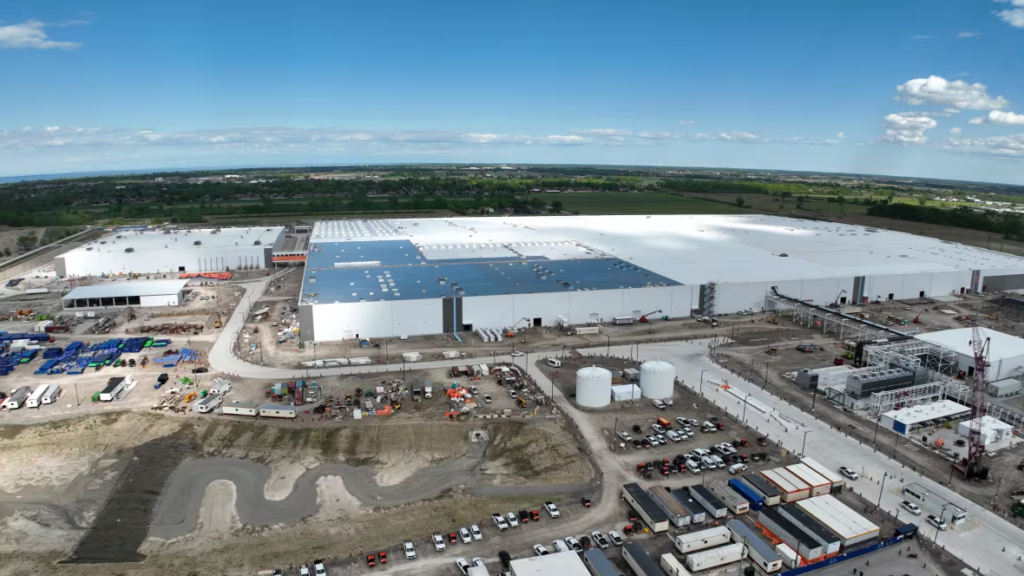
Announced in March 2022, the Windsor Battery Plant is a joint venture between automaker Stellantis and South Korean battery manufacturer LG Energy Solution. The facility is slated to produce lithium-ion batteries for electric vehicles, representing a major investment of approximately $4.9 billion CAD and expected to create over 2,500 jobs. The plant is part of a broader strategy aimed at making Canada a center for EV manufacturing and battery production, crucial for reducing carbon emissions.
Construction of the plant is well underway, with plans to begin operations by 2024. The facility is strategically located in Windsor, Ontario, which has been a traditional hub for automotive manufacturing. This positions the plant advantageously for supply chain logistics, as it can efficiently supply batteries to local automotive factories. The Windsor Battery Plant is expected to produce enough batteries to power more than 400,000 electric vehicles annually, significantly contributing to the increasing EV production in the region.
Events and Collaborations
In addition to its production capacity, the Windsor Battery Plant is exploring collaborations with local research institutions to develop advanced battery technologies. Recent partnerships with universities aim to innovate battery efficiency and sustainability, aligning with global trends towards clean energy solutions. Furthermore, the plant is part of Ottawa’s broader framework to provide financial incentives for EV adoption and foster infrastructure development, such as charging stations, across the country.
Conclusion and Future Outlook
The Windsor Battery Plant is not just a manufacturing facility; it is a pivotal development in Canada’s ambition to transition to a resilient and sustainable economy. As the automotive industry shifts more decisively towards electric vehicles, this plant is anticipated to be a cornerstone in meeting domestic and international demand for EVs. The successful launch and operation of the Windsor Battery Plant could also inspire further investments in green technology and manufacturing across Canada, reinforcing the country’s commitment to environmental stewardship and economic growth. With projections indicating a steady increase in electric vehicle sales, the Windsor Battery Plant may prove to be instrumental in shaping Canada’s future automotive landscape.