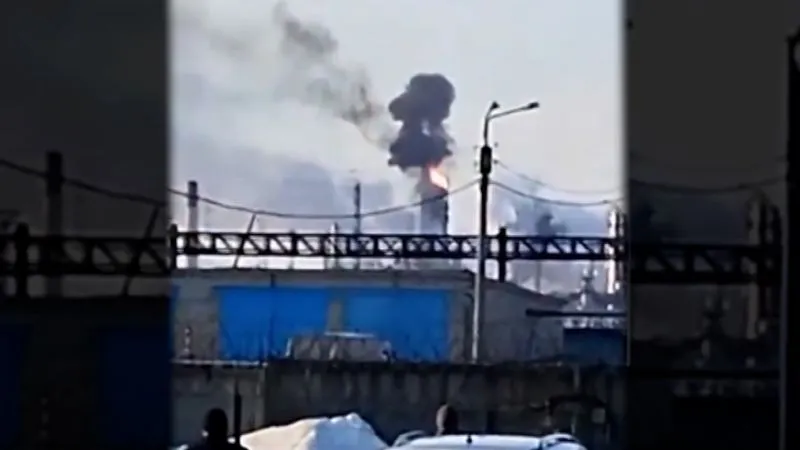
The repeated drone strikes on the Tuapse refinery have caused significant environmental damage and public health warnings for local residents. Residents in Tuapse, Russia, were advised not to drink tap water after a strike impacted the oil facility.
In April 2026, Ukrainian drones struck the Tuapse oil refinery three times. The first strike occurred on April 16, igniting a fire that lasted two days. A subsequent attack on April 20 resulted in another fire, this time lasting five days.
Emergency workers have cleared an astonishing 12,600 cubic metres of contaminated material from the area. Local authorities now recommend that residents consume only bottled water as a precaution against elevated benzene levels in the air.
A troubling phenomenon known as black rain has emerged in Tuapse, covering cars and animals in oil residue. At least eight storage tanks at the refinery were destroyed during these attacks, leading to petroleum leaks into the nearby Tuapse River.
The environmental impact is severe—described by local activist Sergei Solovev as an environmental disaster. “It’s an environmental disaster,” he stated, reflecting widespread concern among residents.
Ruslan Khvostov, a marine biologist, warned that “the oil slick blocks oxygen,” which could lead to mass mortality of fish and other aquatic life in the region. Volunteers have even established animal cleanup centers to assist distressed wildlife affected by the spills.
The situation escalated further after the third drone strike, prompting evacuations within a 20-kilometre radius. As local officials grapple with this crisis, many are left wondering how long it will take to restore safety and normalcy to their community.
Despite reassurances from some residents claiming that “everything is safe and under control!”, the reality suggests otherwise. The ongoing conflict between Ukraine and Russia has now reached Tuapse, leaving its mark on both people and nature alike.