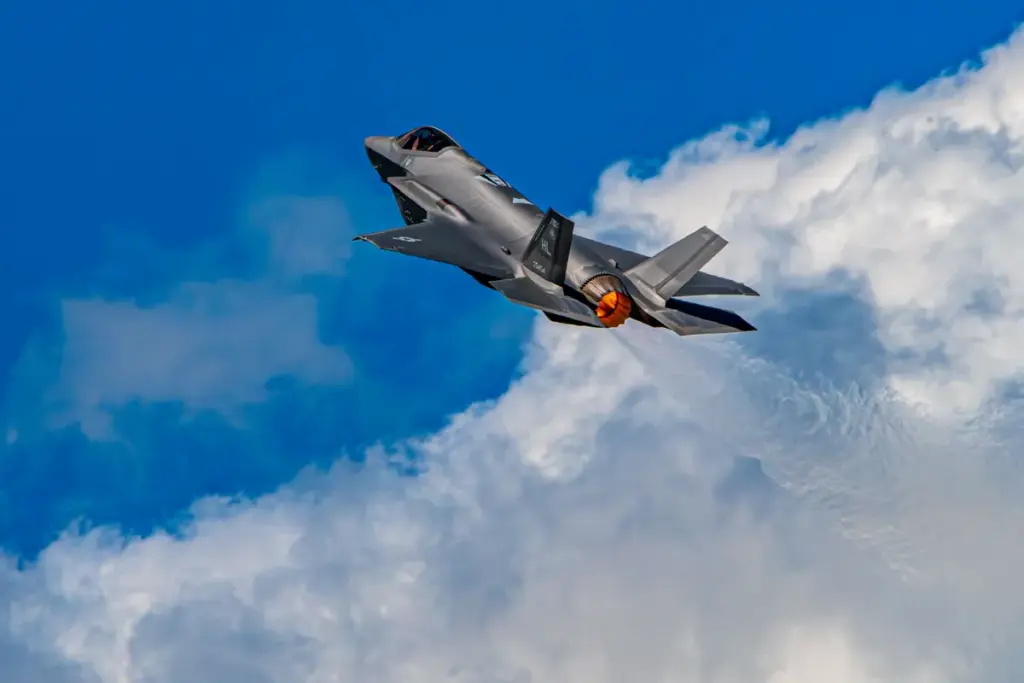
Canada’s decision on acquiring 88 F-35A Lightning II fighter jets remains uncertain as the government has not set a timeline for its $19 billion CAD plan. This indecision raises concerns about the country’s future fighter fleet and defense capabilities.
Initially, Canada aimed to replace its aging CF-18 fleet with the F-35, a fifth-generation fighter jet. However, since launching a review of the purchase in March 2025, no resolution has emerged. David McGuinty stated, “We are taking the necessary time to study very, very closely the question of the fighter fleet.” Yet, this prolonged process leaves many questioning the effectiveness of Canada’s air defenses.
As it stands, Canada has secured funding for only 16 F-35s and made additional payments to preserve production slots. Meanwhile, other countries like Germany and Finland have reaffirmed or expanded their commitments to the F-35 program. This puts pressure on Canada to finalize its decision quickly.
The alternatives are also gaining traction. Saab has proposed the Gripen as a viable alternative to the F-35, offering to assemble it in Canada and transfer significant intellectual property. This could bolster local industry while ensuring that Canada meets its obligations under NORAD and NATO.
In terms of current capabilities, upgrades such as the AIM-120D-3 missile enhance the CF-18’s ability to engage threats at long range. As Canada weighs its options, Maj. Gen. Chris McKenna emphasizes that “NORAD needs an aircraft that has overmatch over the adversaries.” The urgency for a decision grows as geopolitical tensions rise globally.
Amidst these developments, Lockheed Martin recently received a $177.5 million USD contract for three new F-35 flight science aircraft, expected for delivery by 2031. This highlights ongoing U.S. commitment to advancing their fifth-generation capabilities while Canada lingers in deliberation.
The outcome of this ongoing review process is still uncertain. With officials yet to confirm a timeline for a final decision on the F-35s, Canadian defense strategy hangs in a precarious balance — one that could impact national security and international commitments significantly.