Introduction
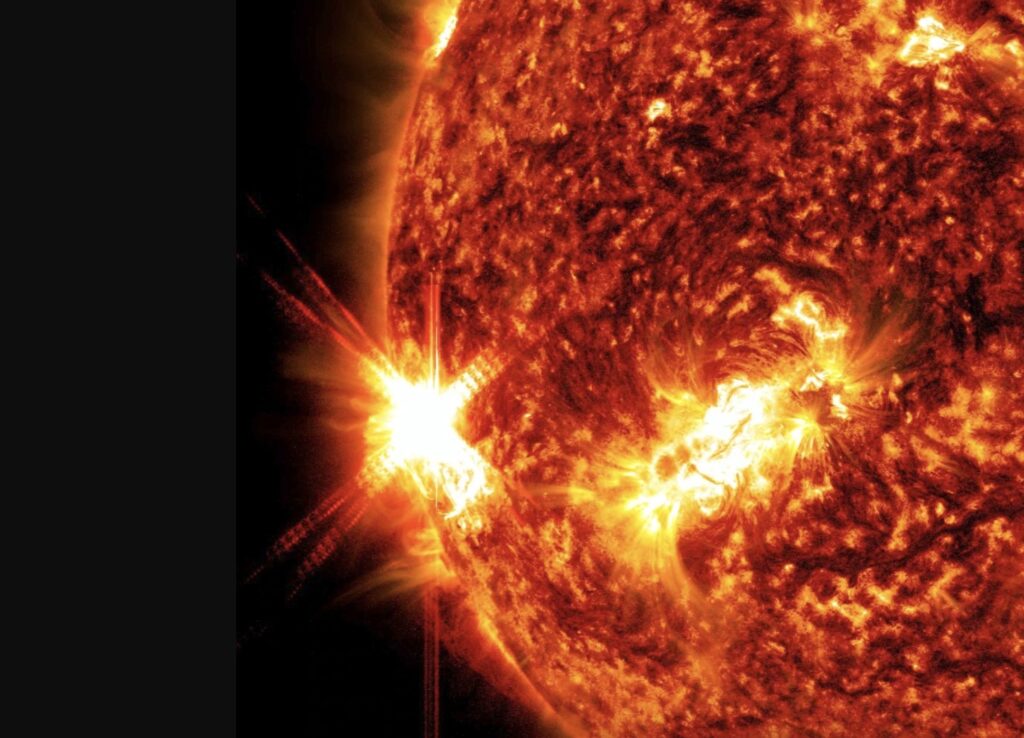
Sun solar flares are powerful bursts of radiation stemming from the sun’s magnetic field. With increasing solar activity observed in recent months, understanding these events is vital. Solar flares can disrupt communication systems, GPS signals, and even power grids on Earth, making their prediction and study essential for modern technology reliance.
What Are Solar Flares?
Solar flares are intense bursts of radiation caused by the release of magnetic energy stored in the sun’s atmosphere. These flares can last from minutes to hours and are categorized according to their energy output: A, B, C, M, and X, with X-class being the most powerful. While they may seem distant, their effects can be felt on Earth, particularly during solar maximum periods when solar activity peaks.
Recent Solar Activity
Recent months have seen an uptick in solar activity, including several significant solar flares classified as M- and X-class. In September 2023, for instance, two powerful flares were reported, leading to high-frequency radio communications disruptions in polar regions. Scientists are monitoring these events closely since they can also increase the risk of geomagnetic storms, potentially impacting satellites and electrical infrastructure.
The Effects of Solar Flares
Solar flares primarily impact Earth’s upper atmosphere, distorting magnetic and radio signals. High-frequency radio communication, GPS systems, and even amateur radio can face interruptions. More critically, large flares can trigger geomagnetic storms, which may lead to power outages in vulnerable regions. The 1989 geomagnetic storm, caused by solar activity, famously plunged Quebec, Canada, into darkness for several hours.
Preparedness and Mitigation
As scientists become better at tracking solar activity using satellites like the Solar Dynamics Observatory (SDO) and the Solar and Heliospheric Observatory (SOHO), preparedness for solar flares is improving. Agencies like NOAA’s Space Weather Prediction Center are working to issue timely alerts, providing critical information that helps mitigate potential hazards. Technological advancements continue to be fueled by the need to safeguard infrastructure against these natural phenomena.
Conclusion
Understanding solar flares and their potential impact on Earth is increasingly important as our reliance on technology grows. While the sun’s activity can pose challenges, ongoing research and monitoring efforts aim to bolster preparedness and reduce risks. As the solar cycle continues toward its peak, further study on solar flares will prove invaluable not only for scientists but also for everyday citizens relying on technology powered by Earth’s solar system.