Who is involved
Generative AI exploded into public consciousness more than three years ago, reshaping how individuals interact with technology. Before this development, many Canadians were largely unaware of the implications of AI, with limited access to education or resources on the subject. The expectation was that as technology advanced, so too would the understanding of it among the general public. However, this has not been the case, particularly in Canada, where AI literacy has lagged behind other nations.
Recent statistics reveal a decisive moment in the understanding of AI. A global survey involving 48,000 participants across 47 countries found that more than two-thirds reported using AI for work, school, or personal reasons. Yet, despite this widespread use, a concerning 60% of respondents admitted to lacking any formal training in AI. This gap highlights a critical need for educational initiatives aimed at bridging the divide between AI usage and understanding.
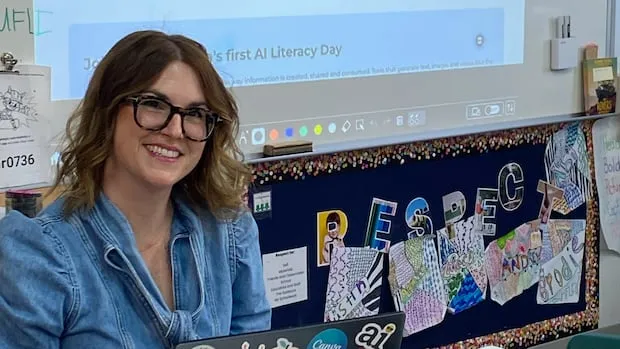
In response to this urgent need, educators like Dana Connors have taken the initiative to teach younger generations about AI and deepfakes. Connors notes, “A lot of them are doing it without even realizing AI is powering it.” This hands-on approach in classrooms is essential as it equips students with the knowledge to navigate an increasingly AI-driven world. Meanwhile, organizations like MediaSmarts have launched an AI Literacy Day in Canada, encouraging communities to engage with and learn about AI technologies.
The Toronto Public Library has also recognized the importance of AI literacy. After receiving numerous inquiries from patrons, the library developed resources and programming specifically focused on AI education. Fiona O’Connor from the library states, “That’s the library’s mandate: you are here to explore because you’re curious and we’re going to help that curiosity.” This initiative aims to foster a deeper understanding of AI among community members, empowering them to use AI tools more effectively.
Despite these positive developments, experts like Matthew Johnson express concern over the overall state of AI education in Canada. Johnson states, “I don’t think there is any sector in Canada that we can say is reliably getting any kind of education relating to AI.” This sentiment underscores the challenges faced by educators and institutions in providing comprehensive AI training across various demographics.
Moreover, the need for AI literacy is particularly pressing for schoolchildren and seniors, who are often the most vulnerable to AI disinformation. Johnson emphasizes that when individuals have a basic understanding of how generative AI works, they tend to use these tools more critically and skeptically. This critical perspective is essential in a world where misinformation can spread rapidly.
As Canada continues to grapple with its position in the global landscape of AI literacy, the efforts of educators and community organizations are vital. With more than 60% of survey respondents believing they can use AI tools effectively, the potential for growth is significant. However, without the necessary training and resources, this potential may remain untapped.
In summary, while the landscape of AI literacy in Canada is evolving, there is still much work to be done. The commitment of educators like Connors and organizations like MediaSmarts and the Toronto Public Library is a promising step forward, but a collective effort is needed to ensure that all Canadians are equipped with the knowledge to navigate the complexities of AI.