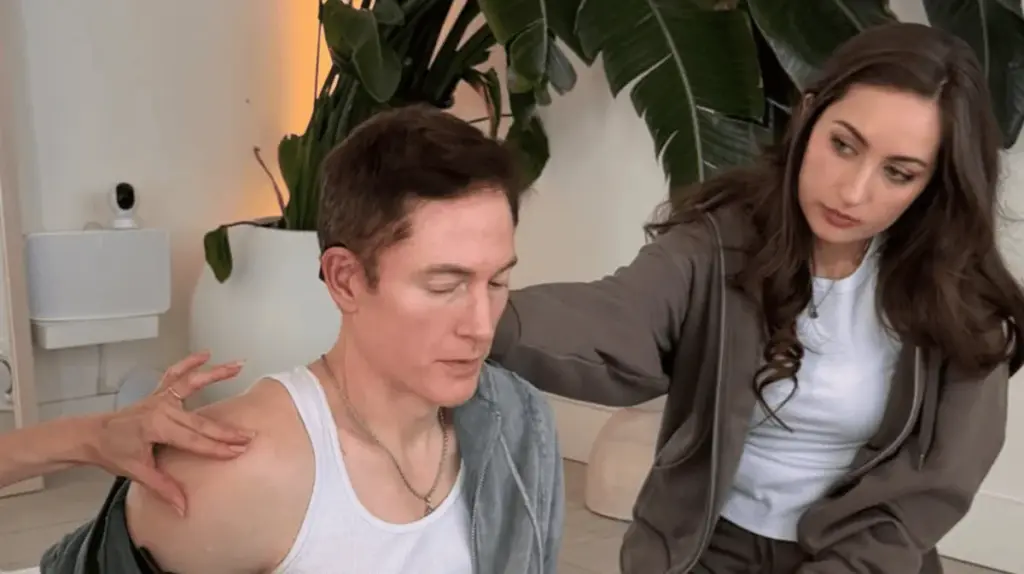
In a surprising move, Bryan Johnson took to social media to share intimate details about his relationship with partner Kate Tolo, specifically discussing her vaginal health. This revelation has ignited a conversation about sexual health and the implications of biohacking in everyday life.
Johnson, a 48-year-old biohacker known for his ambitious project, Project Blueprint, aims to reverse biological aging. He spends around 2 million dollars annually on this endeavor, supported by a dedicated medical team of 30 professionals monitoring his health. His commitment to longevity has brought him into the spotlight, but this latest post raises questions about privacy and public discourse.
In his post, Johnson revealed that Tolo’s vaginal microbiome score is an impressive 100/100, placing her in the top 1% of all vaginas. He highlighted that her microbiome is dominated by Lactobacillus crispatus, accounting for 98.7% of her microbiome composition. This is notable as only about 25-30% of reproductive-age women globally exhibit such dominance.
Tolo, who is 30 years old and co-founder of their longevity startup Blueprint, echoed concerns regarding the lack of discussions around oral sex and its potential risks. She stated, “Oral sex isn’t talked about enough despite carrying genuine risks.” This sentiment reflects a broader issue in public health where many avoid discussing sexual practices openly.
The couple’s transparency has sparked both interest and criticism. Johnson noted that Tolo’s microbiome health is linked to lower risks of conditions such as bacterial vaginosis (BV), urinary tract infections (UTIs), and even improved outcomes in IVF treatments. He remarked, “This is linked to lower risk of BV, UTIs, yeast infections, HPV persistence, HSV-2 and HIV acquisition, preterm birth, and improved IVF outcomes.”
However, Tolo pointed out a critical gap in public awareness: “People don’t get tested for oral STIs…. or talk to partners about dental health, recent illness, or when they were last screened. It’s a public health gap.” This underscores the need for more comprehensive education around sexual health.
The couple has been together for over three years now. Their open dialogue about personal health may inspire others to address similar topics more candidly—yet it also raises ethical questions about what should remain private.
As discussions around their revelations continue to evolve, it remains unclear how this will impact perceptions of biohacking and sexual health awareness at large. The conversation they’ve opened could lead to greater scrutiny on how we approach these sensitive subjects in society.