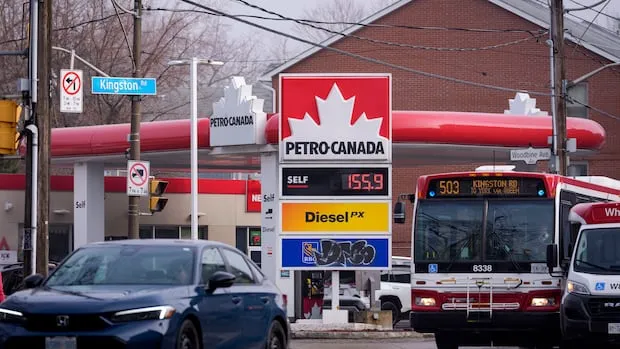
Current State of Canada Gas Prices
As of Friday evening, average retail prices for gasoline in Canada have climbed to 150 cents per litre. This increase is particularly pronounced in British Columbia, where prices have reached a staggering 168.6 cents per litre. In Edmonton, the cost of regular gasoline has risen to approximately $1.50 per litre, while New Brunswick has seen prices rise to about $1.45 a litre.
Factors Influencing Price Increases
The surge in gas prices can be attributed to a combination of factors, including a significant rise in wholesale gasoline prices, which have increased by roughly 20 cents since Tuesday. Additionally, diesel prices have seen an even steeper rise, up nearly 40 cents. This escalation in fuel costs is closely linked to benchmark crude oil prices in the United States, which recently hit a two-year high, exceeding $90 US per barrel.
Geopolitical Context
The ongoing conflict in the Middle East has disrupted oil tanker traffic in the Strait of Hormuz, a crucial artery through which a fifth of the world’s oil passes. Iran has threatened to close this vital passage in response to attacks, further contributing to the volatility in global oil prices. As a net oil exporter, Canada is affected by these international dynamics, despite its domestic fuel prices being tied to global benchmarks.
Market Predictions and Consumer Sentiment
Experts predict that gas prices could remain elevated for weeks, with expectations of an increase of 5 to 10 percent higher than pre-conflict levels. Dan McTeague, an industry analyst, indicated that consumers might see prices rise by another 10 to 12 cents for gasoline and an additional 20 cents for diesel in the coming week. This forecast has left many consumers concerned about the financial impact of rising fuel costs.
Public sentiment regarding the rising gas prices is mixed. Amy Gooding expressed a common sentiment, stating, “To me, I feel like I need gas regardless of the price. But I guess that cuts into other things that you could use the money for.” Meanwhile, Bailey Jones noted, “It’s probably only going to get worse,” reflecting a growing apprehension among consumers about the sustainability of these price hikes.
Economic Implications
Higher gas prices can potentially support resource revenues for the Canadian economy if sustained over time. Richard Masson, an industry expert, emphasized that while higher prices can benefit revenues, it is crucial to remember that these revenues are driven by monthly average prices rather than daily trading levels. This distinction is important for understanding the long-term economic implications of current price trends.
As the situation continues to evolve, the impact of rising gas prices on Canadian consumers and the economy remains a critical issue. With geopolitical tensions influencing global oil markets, the future of fuel prices in Canada is uncertain, and details remain unconfirmed. Consumers and industry stakeholders alike will be closely monitoring developments in the coming weeks.